
Concrete - residential and commercial
Concrete: Curb and Gutter, Aprons, and Flatwork
Loading dock aprons, dumpster pads, curb and gutter, and sidewalks. The asphalt around them is priced and scheduled with the concrete.
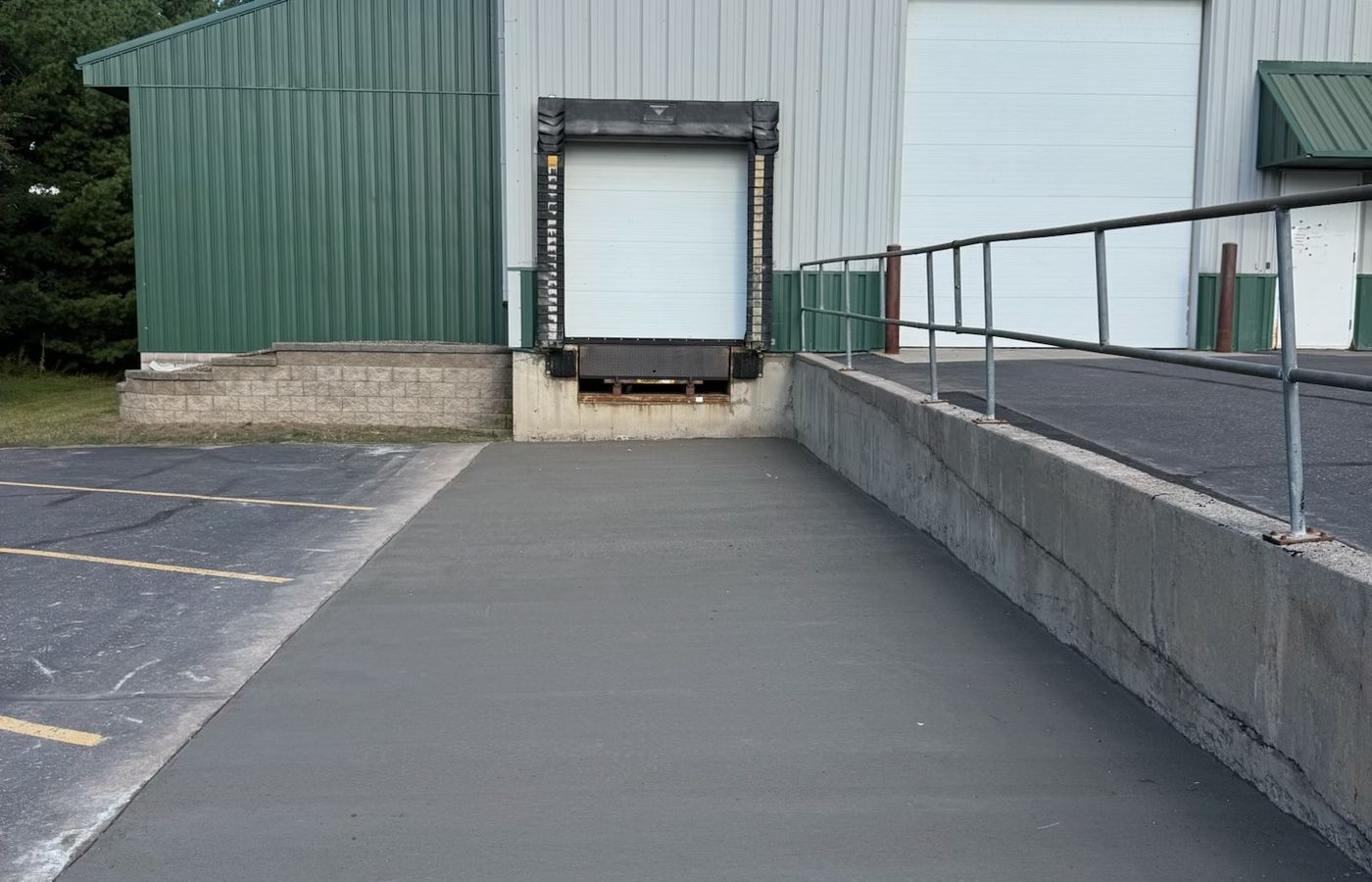
The joint between concrete and asphalt
Concrete and asphalt move differently. Concrete is rigid and moves at its joints; asphalt is flexible and moves everywhere. Where they meet, that difference has to be absorbed, and if it's not, the joint opens. Once it's open, water goes straight into the base under both of them. This is why so many lots fail first at the dock apron, the dumpster pad and the garage apron. Not because those slabs were bad, but because two trades laid two materials and the line where they met was nobody's. We pour the concrete and lay the asphalt against it, so that joint belongs to the job.
From our jobs
Job Photos
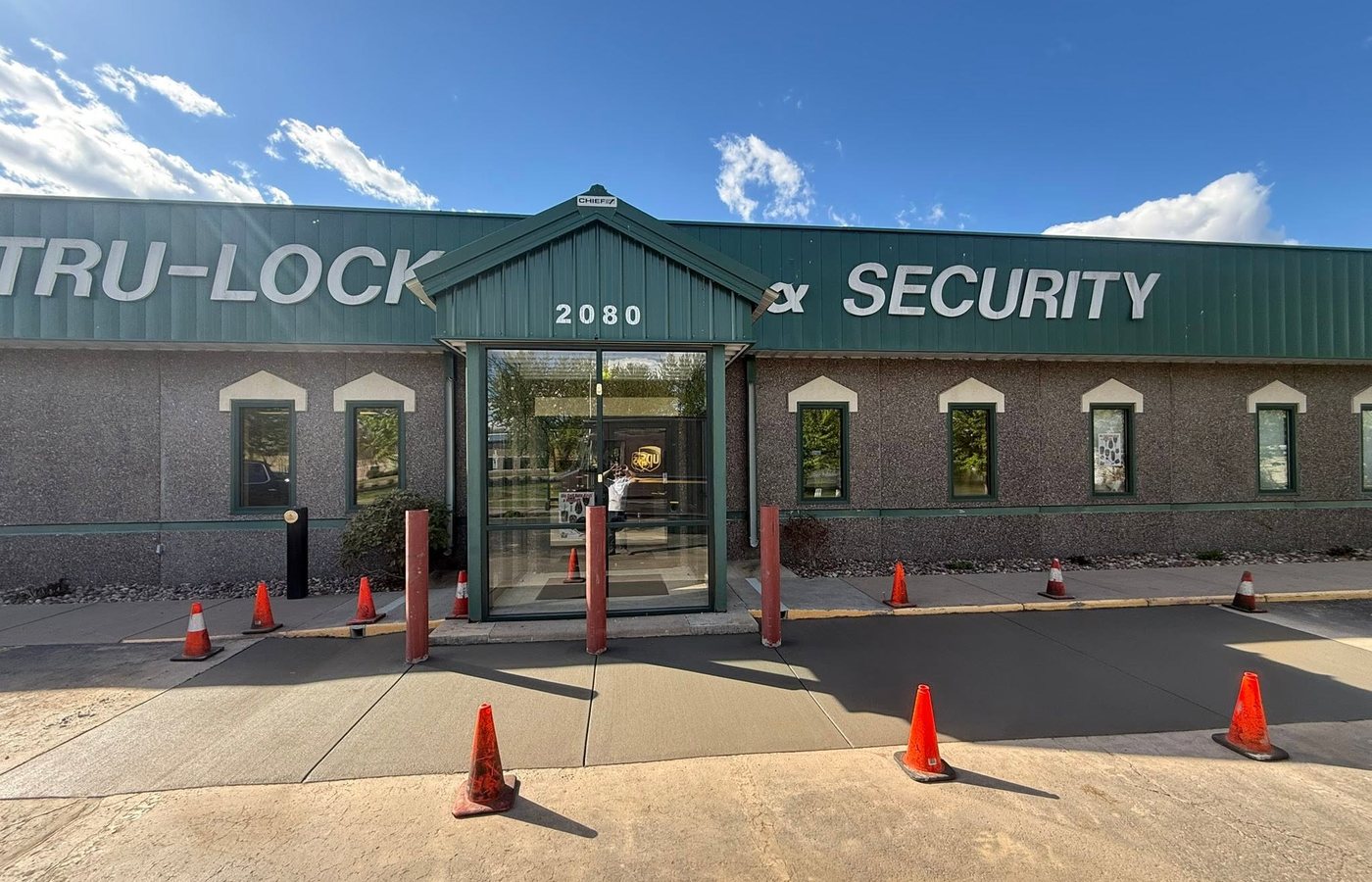
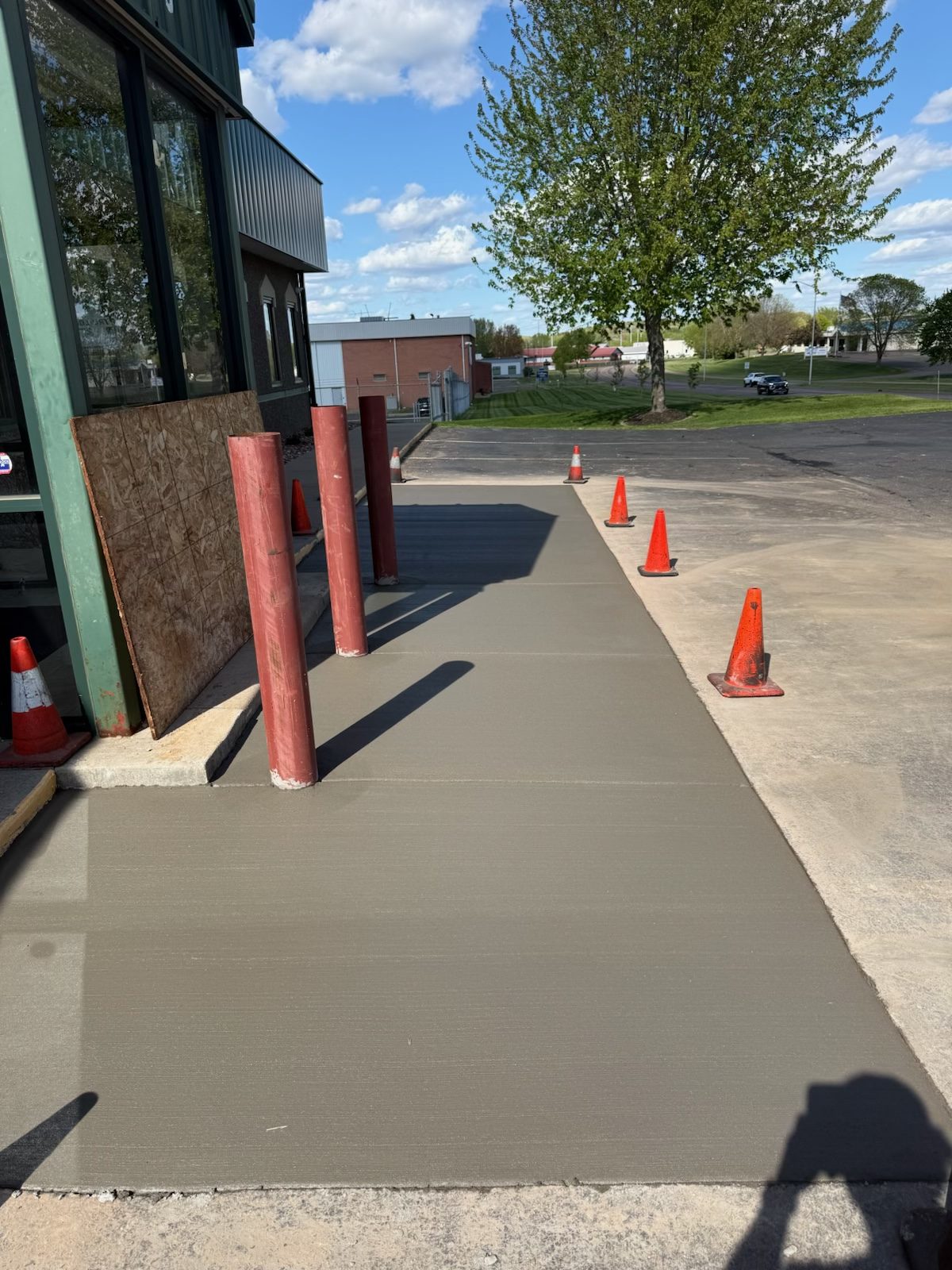
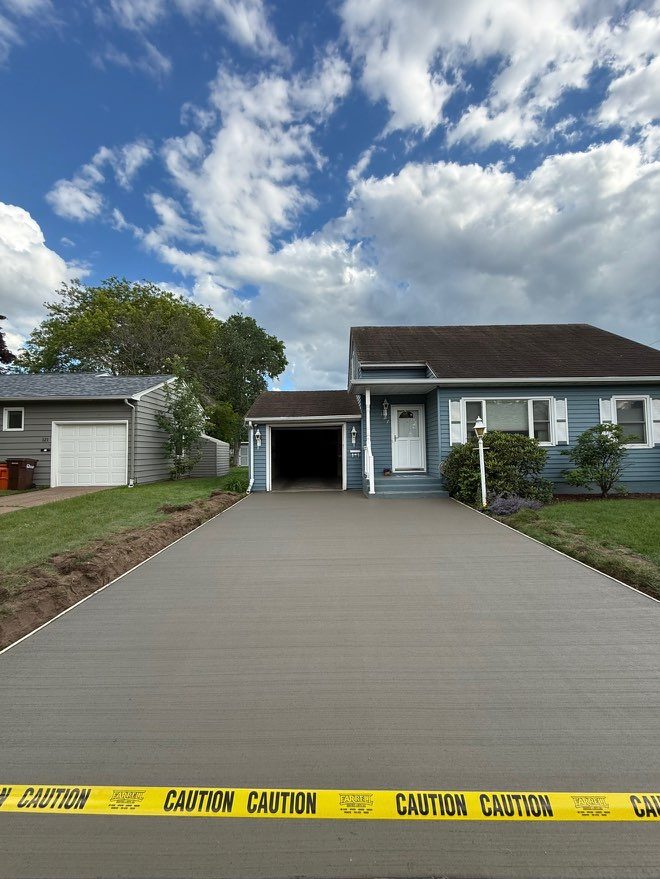
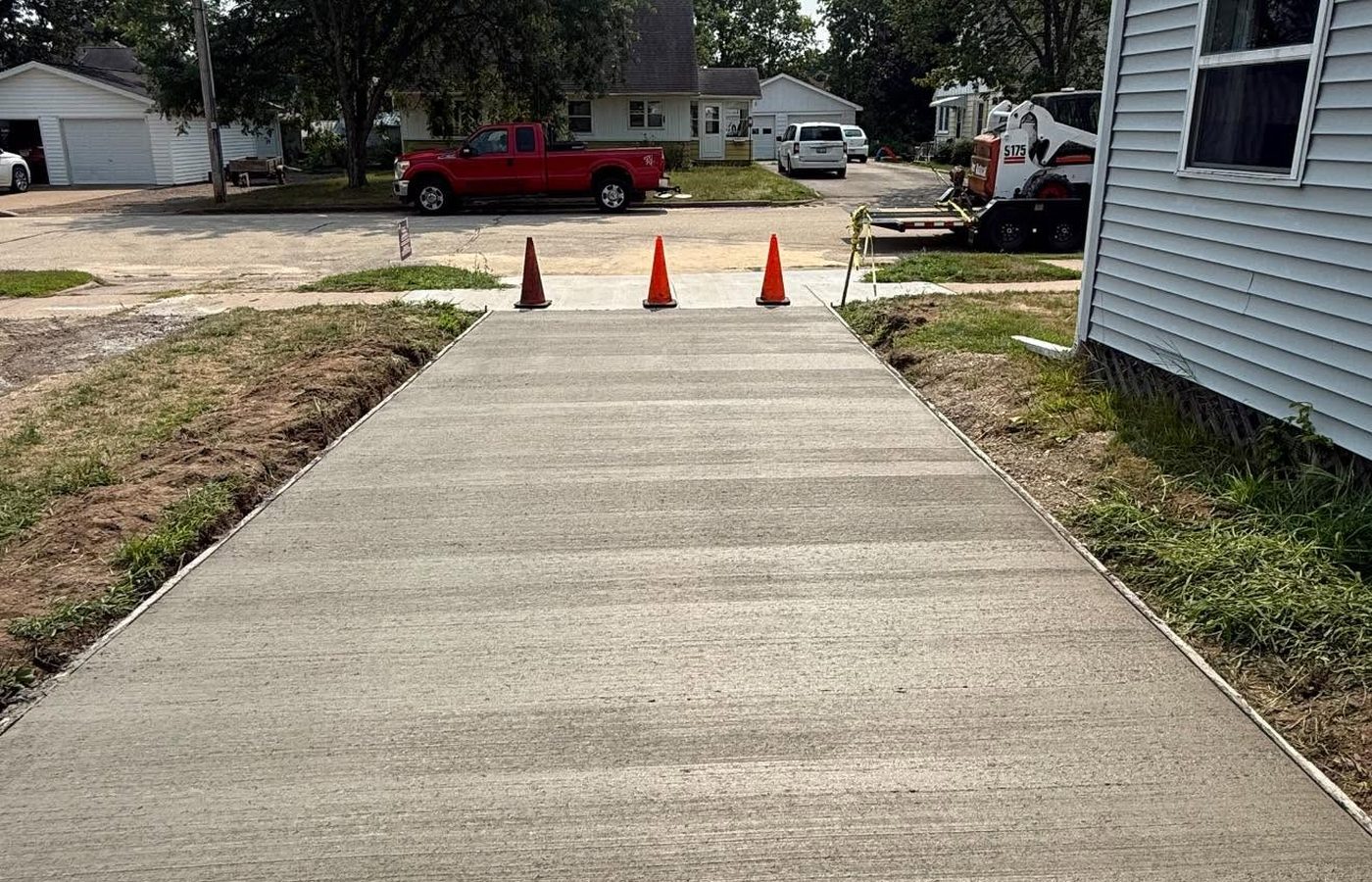
Jobs We Go Deeper On
Loading dock aprons
Why a loaded trailer's landing gear takes asphalt apart at a dock door, and what the apron gets poured at.
Dumpster pads
The damage is at the front lip because that is where the truck lifts. Sizing the pad to the approach, not the container.
Concrete repair
Concrete that has already failed on a property: sidewalk panels, curb sections, approaches and pads, cut out at the joints and poured back flush.
Commercial and residential concrete
Commercial work is quoted per project after a walk. Residential flatwork prices per square foot and is straightforward to quote from measurements.
Commercial
The work that keeps a lot working.
Quoted per project
Formed, tied and poured, with the asphalt cut in against the finished edge.
- Dock aprons that take the wheel loads a truck actually puts on them
- Dumpster pads, which are the single most abused slab on any property
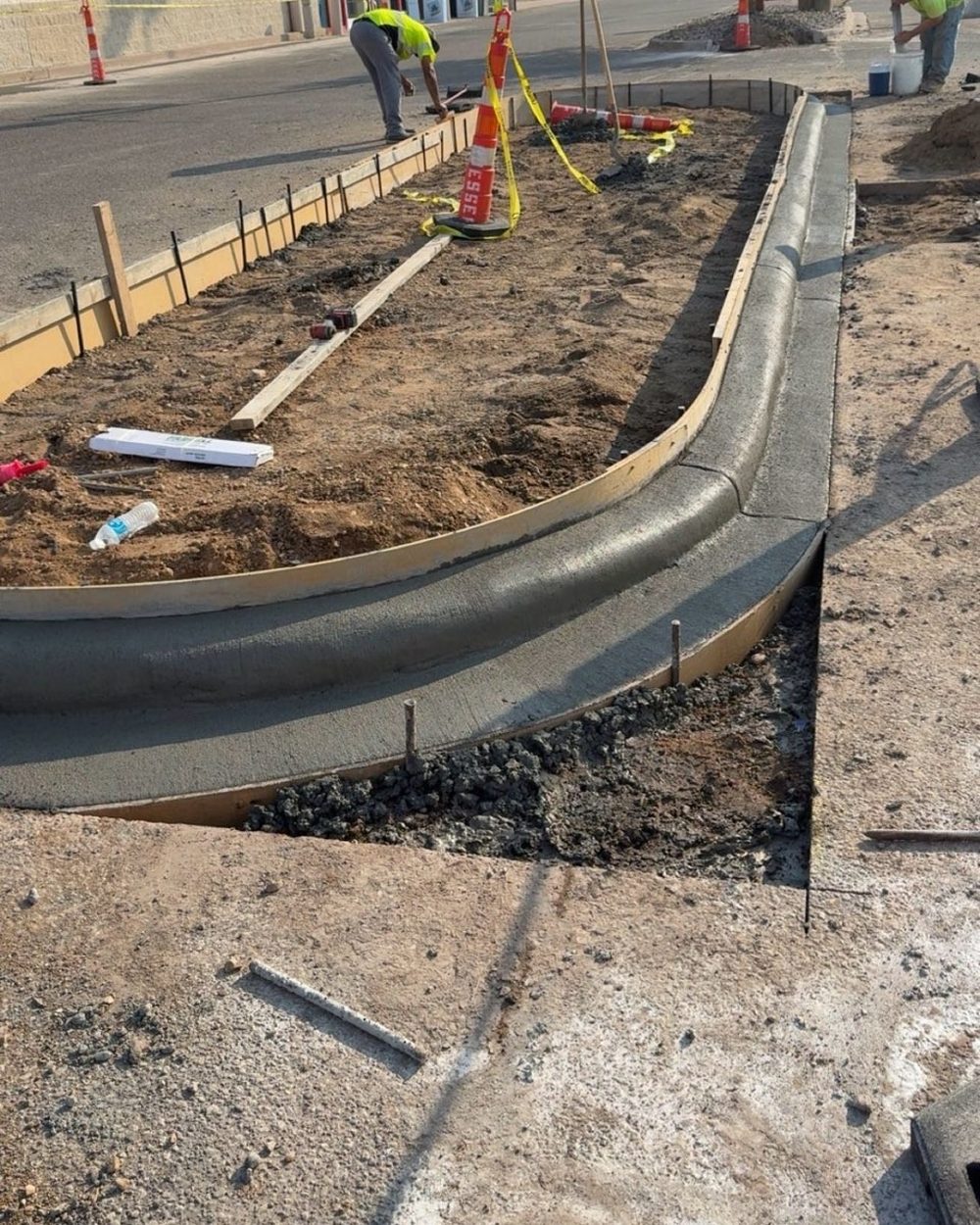
- Curb and gutter, including radius work
- Scheduled with you before we start
Residential
Driveways, aprons and flatwork.
Measured and quoted on site
New concrete driveways, garage aprons, sidewalks, patios and steps. Broom finish as standard, with control joints cut where the slab is going to crack anyway rather than on a grid.
- Base prepared and compacted, not poured on whatever is there
- Reinforced where the span and the loading call for it
- Control joints cut, not just tooled
- Old surface removed and hauled
What decides the price.
Flatwork prices per square foot and is easy to quote from measurements. Structural work like curb or a dock apron is quoted per project, because the forming is most of the labor and it doesn't scale with area.
Residential flatwork
Driveways, sidewalks, patios
Measured on site
- Per square foot, broom finish, base prepared
- Removal of the old surface priced separately
Garage or dock apron
Per project
Measured on site
- Thicker slab, tied rebar, asphalt tied back in
Dumpster pad
Per pad
Measured on site
- Heavy slab, because a loaded truck on a hot day is the worst case
- Sized to the truck, not to the dumpster
Curb and gutter
Per linear foot
Measured on site
- Straight run at the low end, radius work at the high end
What moves it: thickness, reinforcement, how much has to come out first, access for a truck, and whether the asphalt around it needs tying back in. Removal and haulaway is a real line and gets quoted rather than buried.
How the Work Goes
Base, forms, steel, pour, finish, and the asphalt tied back in against it.
Take out what's there
Broken slab out and hauled away, down to whatever the new pour needs to sit on.
Prepare and compact the base
Graded and compacted. Concrete poured on soft ground cracks on a schedule set by the ground, not by the concrete.
Form and reinforce
Formed to grade so water runs where it should, and reinforced where the span and the loading call for it. Radius forms for curb work.
Pour and finish
Placed, screeded, floated and broom finished. Control joints cut where the slab is going to crack, so that it cracks there instead of somewhere visible.
Tie the asphalt back in
The step most concrete contractors leave to somebody else. Asphalt cut tight to the new edge, compacted, joint sealed.
Where We Do This
Concrete flatwork and structural work across northwestern Wisconsin, residential and commercial.
How much does a concrete driveway cost?
Concrete or asphalt for a driveway?
Do you do curb and gutter?
Why do dumpster pads fail so often?
How long before we can use new concrete?
Do you subcontract the concrete out?
Questions We Get Asked About This
Each one has a page of its own, answered in full.
Concrete, asphalt, or the joint between them.
Free estimate on either. Tell us what the surface has to carry and how it is failing now, and the estimate covers both materials.
(715) 450-9897Call and describe it. On a driveway we can usually tell you what you're looking at while you're on the phone.
Get an estimate
Send the form and we'll call you back. The estimate is free.