
Concrete in Eau Claire
Concrete in Eau Claire, Wisconsin.
Concrete flatwork, aprons and curb in Eau Claire. Commercial pours go down at 4,500 PSI with tied rebar, priced and scheduled with the asphalt.
Home base. The estimate is free.
Working in Eau Claire
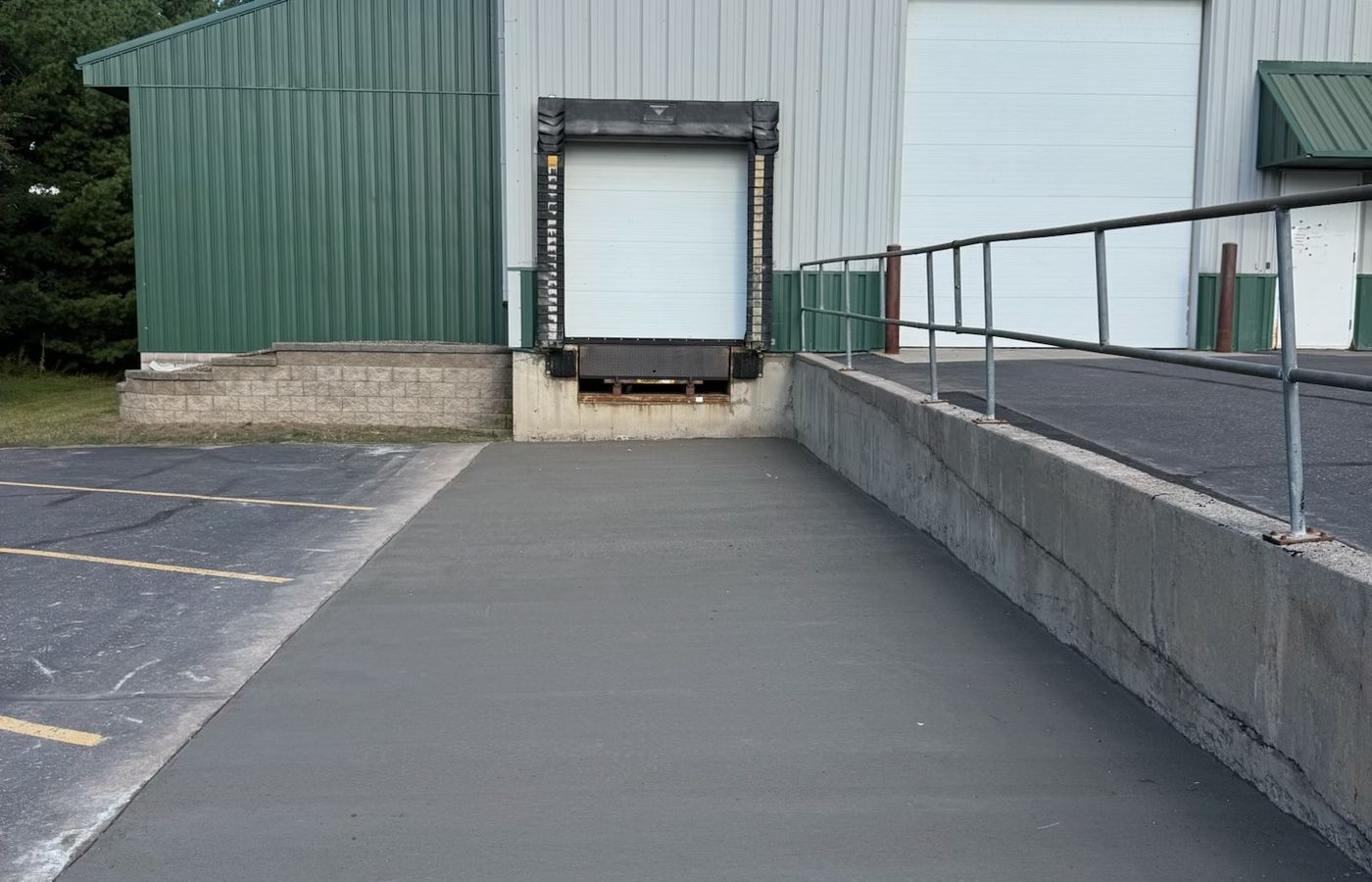
The commercial concrete Eau Claire wears out first is dock aprons and dumpster pads in the two big industrial parks, Chippewa Valley on the northeast side and Gateway Northwest off the North Crossing. Both are truck-heavy, and a pad sized for the container rather than the truck is the usual point of failure.
From our jobs
Job Photos
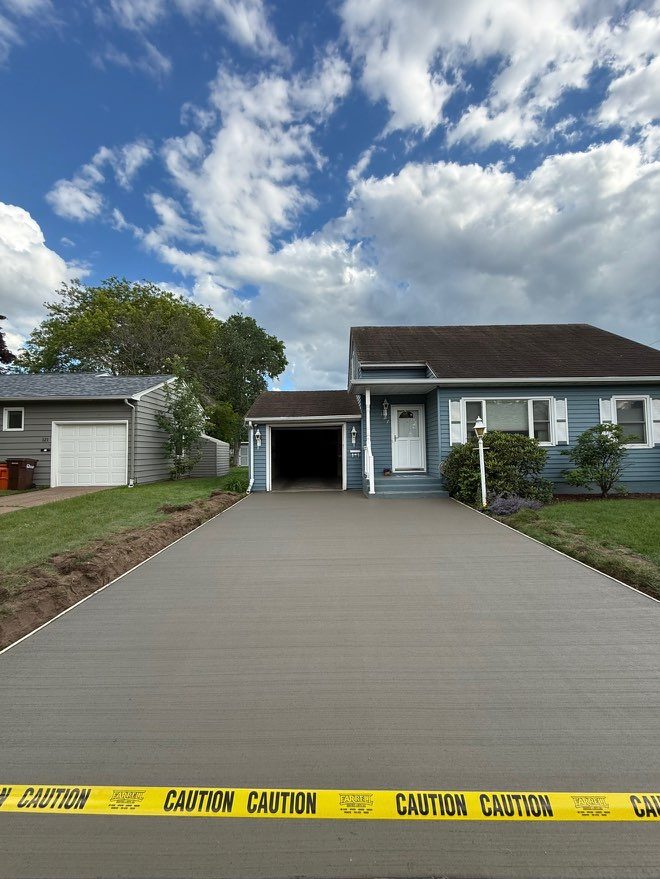
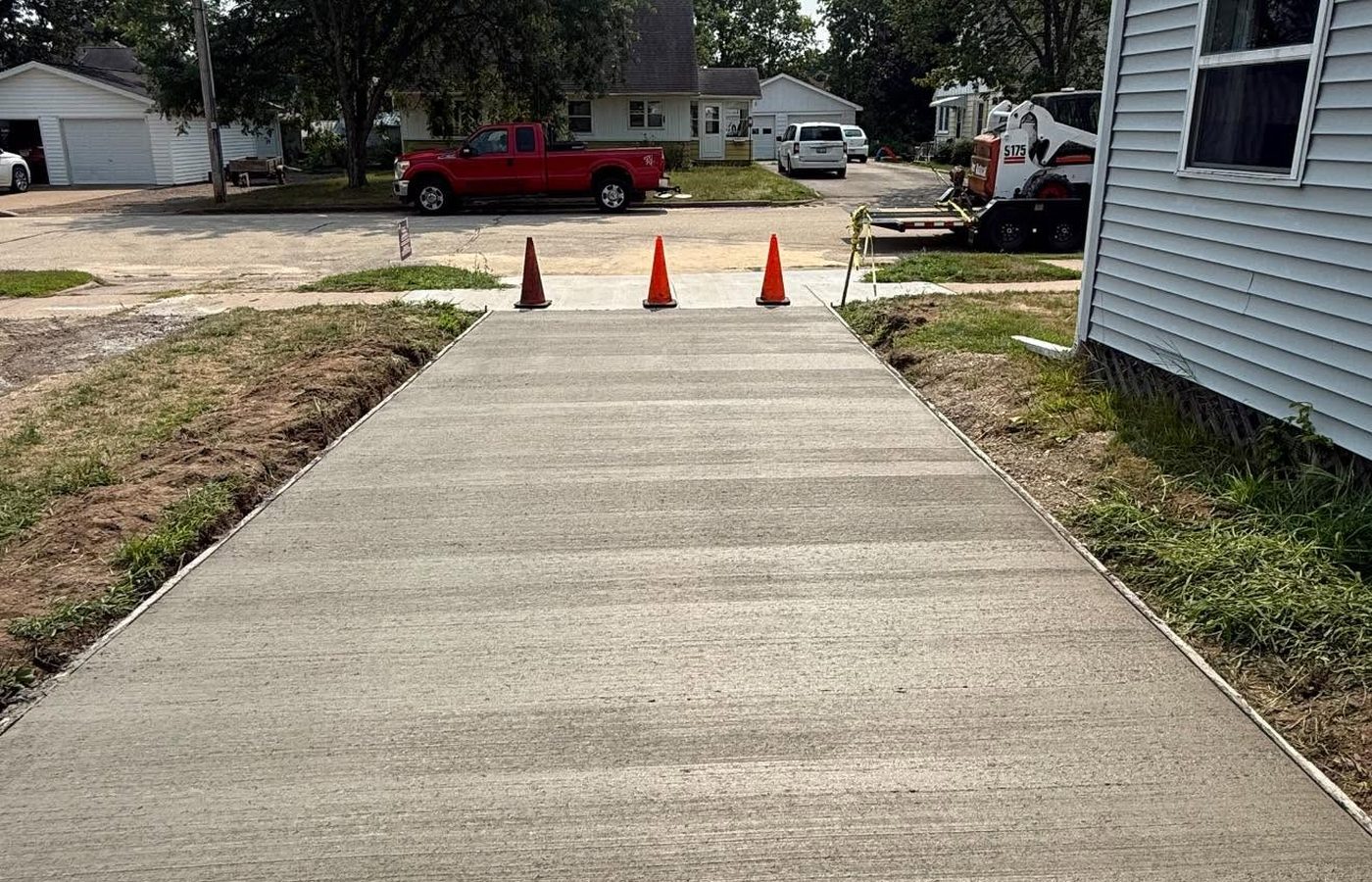
The joint between concrete and asphalt
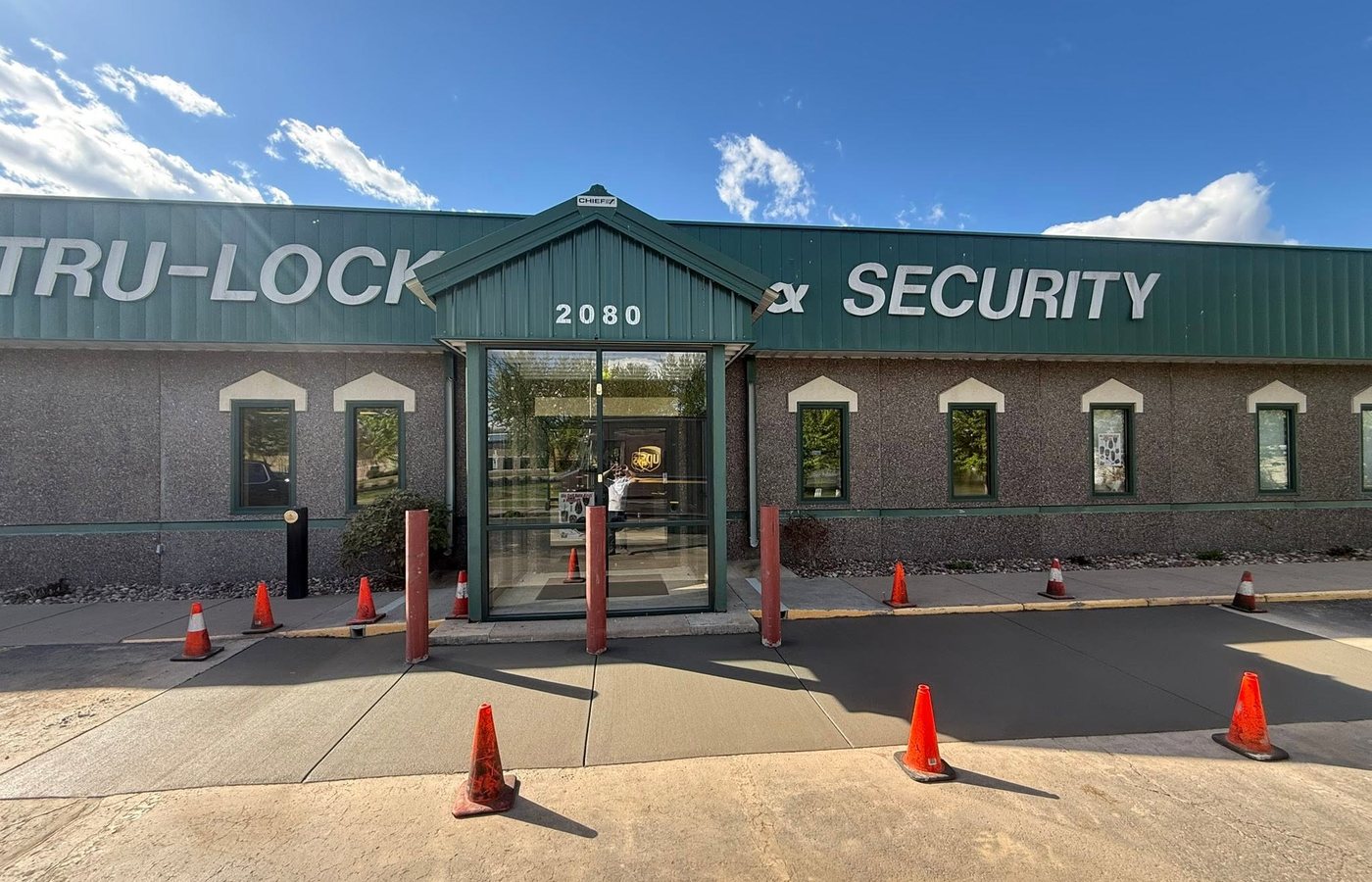
Concrete and asphalt move differently. Concrete is rigid and moves at its joints; asphalt is flexible and moves everywhere. Where they meet, that difference has to be absorbed, and if it's not, the joint opens. Once it's open, water goes straight into the base under both of them. This is why so many lots fail first at the dock apron, the dumpster pad and the garage apron. Not because those slabs were bad, but because two trades laid two materials and the line where they met was nobody's. We pour the concrete and lay the asphalt against it, so that joint belongs to the job.
What Decides the Price in Eau Claire
Flatwork prices per square foot and is easy to quote from measurements. Structural work like curb or a dock apron is quoted per project, because the forming is most of the labor and it doesn't scale with area.
Residential flatwork
Driveways, sidewalks, patios
Measured on site
- Per square foot, broom finish, base prepared
- Removal of the old surface priced separately
Garage or dock apron
Per project
Measured on site
- Thicker slab, tied rebar, asphalt tied back in
Dumpster pad
Per pad
Measured on site
- Heavy slab, because a loaded truck on a hot day is the worst case
- Sized to the truck, not to the dumpster
Curb and gutter
Per linear foot
Measured on site
- Straight run at the low end, radius work at the high end
What moves it: thickness, reinforcement, how much has to come out first, access for a truck, and whether the asphalt around it needs tying back in. Removal and haulaway is a real line and gets quoted rather than buried.
How We Do Concrete in Eau Claire
Base, forms, steel, pour, finish, and the asphalt tied back in against it.
Take out what's there
Broken slab out and hauled away, down to whatever the new pour needs to sit on.
Prepare and compact the base
Graded and compacted. Concrete poured on soft ground cracks on a schedule set by the ground, not by the concrete.
Form and reinforce
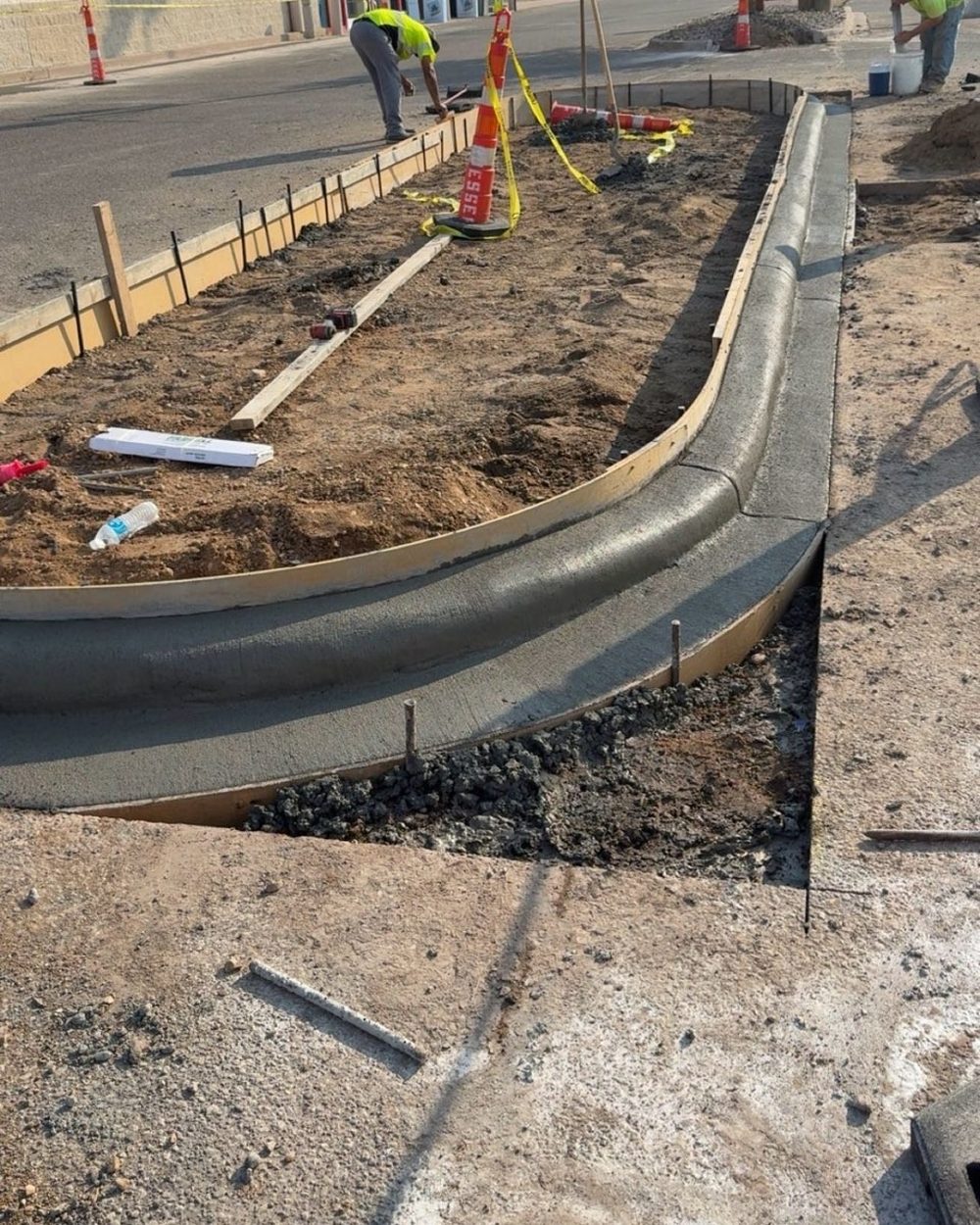
Formed to grade so water runs where it should, and reinforced where the span and the loading call for it. Radius forms for curb work.
Pour and finish
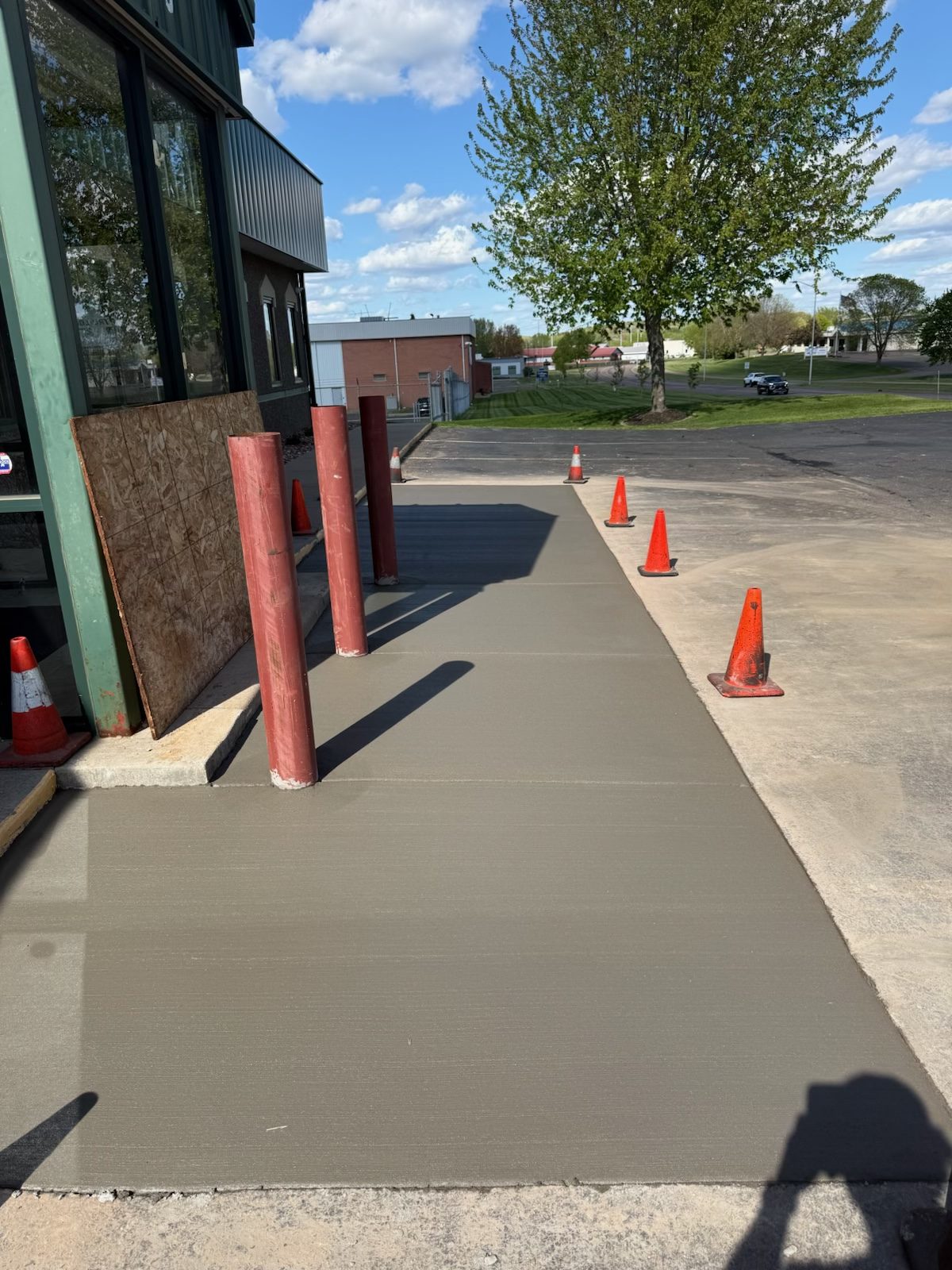
Placed, screeded, floated and broom finished. Control joints cut where the slab is going to crack, so that it cracks there instead of somewhere visible.
Tie the asphalt back in
The step most concrete contractors leave to somebody else. Asphalt cut tight to the new edge, compacted, joint sealed.
Questions We Get in Eau Claire
What Eau Claire calls us about, answered straight.
More questions answeredWe manage an apartment building near campus. Is that residential or commercial?
How much does a concrete driveway cost?
Concrete or asphalt for a driveway?
Do you do curb and gutter?
Why do dumpster pads fail so often?
How long before we can use new concrete?
Do you subcontract the concrete out?
The Driveways and Lots in Eau Claire
Eau Claire sits where the Eau Claire River meets the Chippewa, on the northern edge of the Driftless Area. That matters for pavement more than it sounds: the city runs from river flats up steep slopes toward the east and south sides, so grade and drainage vary sharply from one neighborhood to the next. Clairemont Avenue, Hastings Way and the North Crossing carry most of the commercial traffic.
The valley soils along both rivers are sandy outwash, in places tens of feet deep. Sand drains well, which is good, and it also migrates when water is moving through it, which is why so many failures here start at a catch basin or a downspout outlet rather than in the middle of a lot.
The other thing worth knowing about Eau Claire is the grade. A driveway on the Eastside Hill or up toward Putnam Heights sheds water quickly and wears at the bottom; a flat lot down near the confluence holds it. Those two need different answers, and quoting them the same way is how a contractor ends up sealing over a drainage problem.
The most mixed stock in the valley. About a third of Eau Claire's houses were built before 1960 and nearly a fifth before 1940, while the single largest cohort is the 1970s at roughly 16 percent of all housing. In practice that means we work on everything here: narrow pre-war drives in the Third Ward and Randall Park, wide 1970s suburban aprons, and new construction on the edges.
It's also a heavy rental market. Close to a fifth of the housing sits in buildings of five units or more, which is why so much of our residential work here is actually small commercial: apartment lots and converted properties around the university.
Where we work in Eau Claire
- Third Ward
- Randall Park
- Eastside Hill
- North River Fronts
- North Side Hill
- Shawtown
- Putnam Heights
- Sherman Creek
- Upper Westside
Around Eau Claire: Carson Park, Phoenix Park, Pablo Center at the Confluence, Banbury Place, Half Moon Lake.
72,331 people, 2024 Census estimate.
Eau Claire averages 55.4 inches of snow a year against about 33 inches of total precipitation, so snow outweighs rain. Wisconsin's building code sets footings at a minimum of 48 inches below grade for frost, which is a fair proxy for how hard the freeze works on anything above it.
Get a Free Estimate in Eau Claire
Tell us what it looks like and we'll come measure it. You get a written price before anything starts.
(715) 450-9897- Free on driveways and lots anywhere in the service area
- A photo of the problem helps, and it can go in the message
- Surfaces that are not ready yet get told so at the estimate
Get an estimate
Send the form and we'll call you back. The estimate is free.
Other Work We Do in Eau Claire
- Sealcoating in Eau Claire
- Crack Filling and Sealing in Eau Claire
- Asphalt Repair and Patching in Eau Claire
- Catch Basin Repair in Eau Claire
- Parking Lot Striping in Eau Claire
- Track and Athletic Surfaces in Eau Claire
- Concrete Repair in Eau Claire
- Asphalt Paving in Eau Claire
- Commercial Snow Removal in Eau Claire
Concrete in Nearby Towns
- Concrete in Altoona
- Concrete in Lake Hallie
- Concrete in Chippewa Falls
- Concrete in Elk Mound
- Concrete in Fall Creek
- Concrete in Colfax
Everything about concrete, including how the work goes and what changes the price