
Concrete repair - walks, curb and approaches
Concrete Repair: Sidewalk Panels, Curb and Approaches
Concrete that has failed on a property you already own. We saw cut the failed section at the joints, take it out full depth, repair the base under it, form it against the concrete that stays, and pour it back flush.
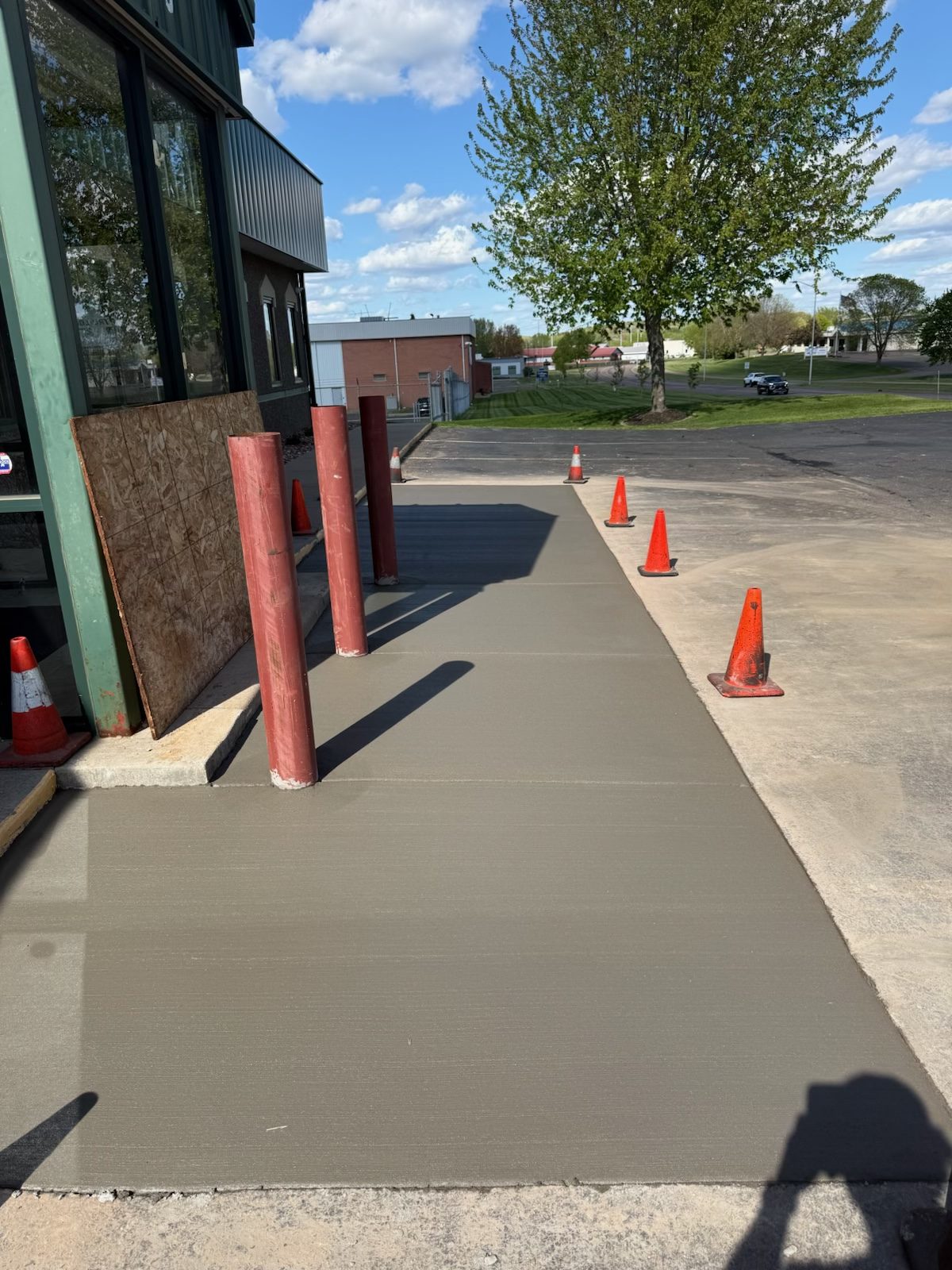
Out now, or leave it another season?
What comes out and what can wait
What a property manager can see standing over it, and what it usually turns out to be.
- A sidewalk panel has lifted at the joint and there is a lip you can catch a toe on Needs replacement. That panel comes out. Under the federal standard anything over half an inch has to be ramped, and a lip that started at a quarter inch has a plow working on it every winter.
- Cracks across a walk with both sides still level and no lip Repairable. Concrete cracks. With the two sides still in the same plane there is no trip hazard and nothing underneath is moving, so it can wait.
- The curb nose is broken off for a few feet where the plow caught it Needs replacement. A section job. Cut back to sound concrete either side, formed and poured back, priced by the foot.
- The gutter is rough and flaking, the curb face still true Depends, send a photo. Surface scaling from de-icer. How deep it has gone decides whether the gutter comes out, and that is a look rather than a guess.
- The approach at the street has cracked along the gutter line and dropped Needs replacement. The base under the private side has moved and the crack is taking water into it. This is the piece every customer drives over and it is in the right-of-way, so the city has a rule about it.
- One section of a drive lane is broken up, the concrete around it sound Needs replacement. That section, not the area. Concrete cracking in the middle of a panel rather than at its joints is the tell that the base failed under it.
- Water stands against the curb after every rain Depends, send a photo. The curb may be fine and the grade may not be. Ponding along a curb line is usually about whether the water can still reach the basin.
Send a photo taken along the walk or the curb line rather than straight down, so the lip shows.
How concrete fails in a Wisconsin winter
Four things take concrete apart here, and each one goes after a different part of a property. A sidewalk panel sits on saturated ground or over a root. The water under it freezes, expands and lifts the panel. In spring the ground thaws and settles, and the panel does not go all the way back down with it, so what was flush in October is a lip in April. Then a plow blade catches that lip every storm for five months and breaks the leading edge off it. A curb takes the plow head on. The blade rides up the gutter, catches the curb face and takes the nose off in chunks. Salted slush sits in the gutter longer than anywhere else on the lot, because the gutter is where everything on the lot drains to, so the gutter is where the surface scales first. De-icer does the same thing to flat concrete. Chloride pulls water into the surface and runs more freeze and thaw cycles through it in a season than the weather would on its own. The mortar skin comes off in flakes and the aggregate stands proud. The approach at the street is a joint between two slabs that belong to different people. The street sits on a road section and a deep base; the drive sits on whatever was there. Frost gets under the shallower one first, the apron cracks along the gutter line, and that crack takes water into the base under both of them.
From our jobs
Job Photos
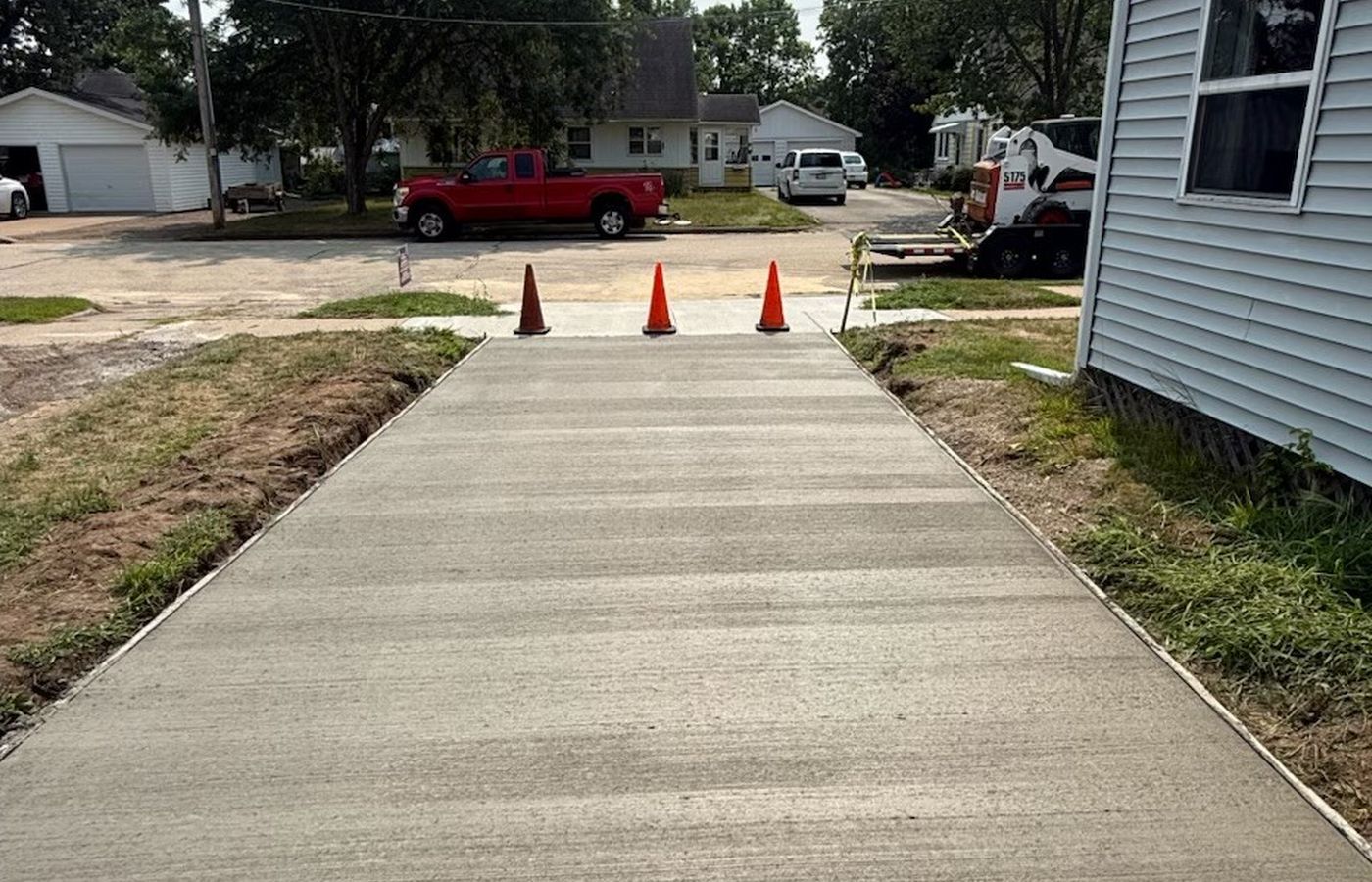
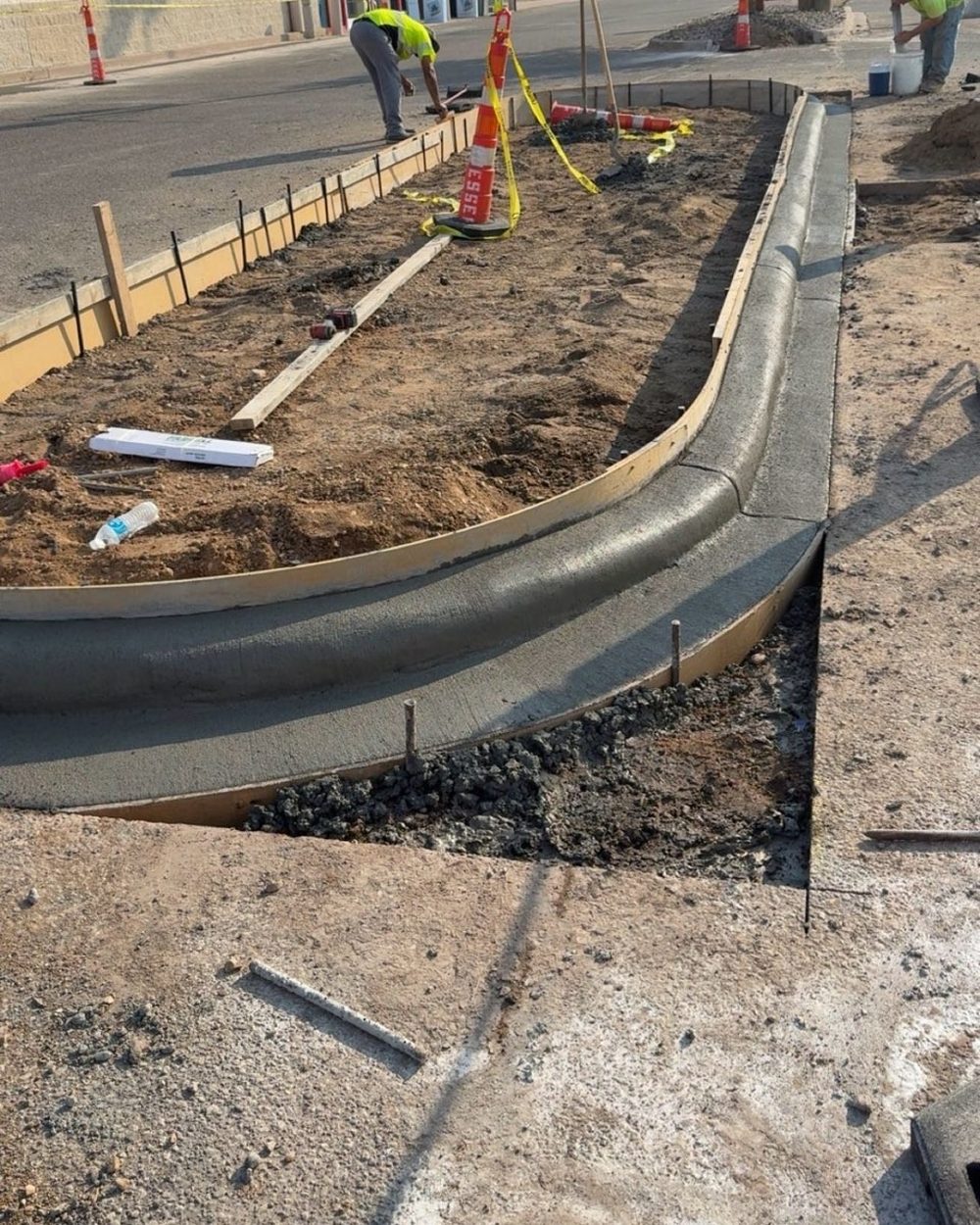
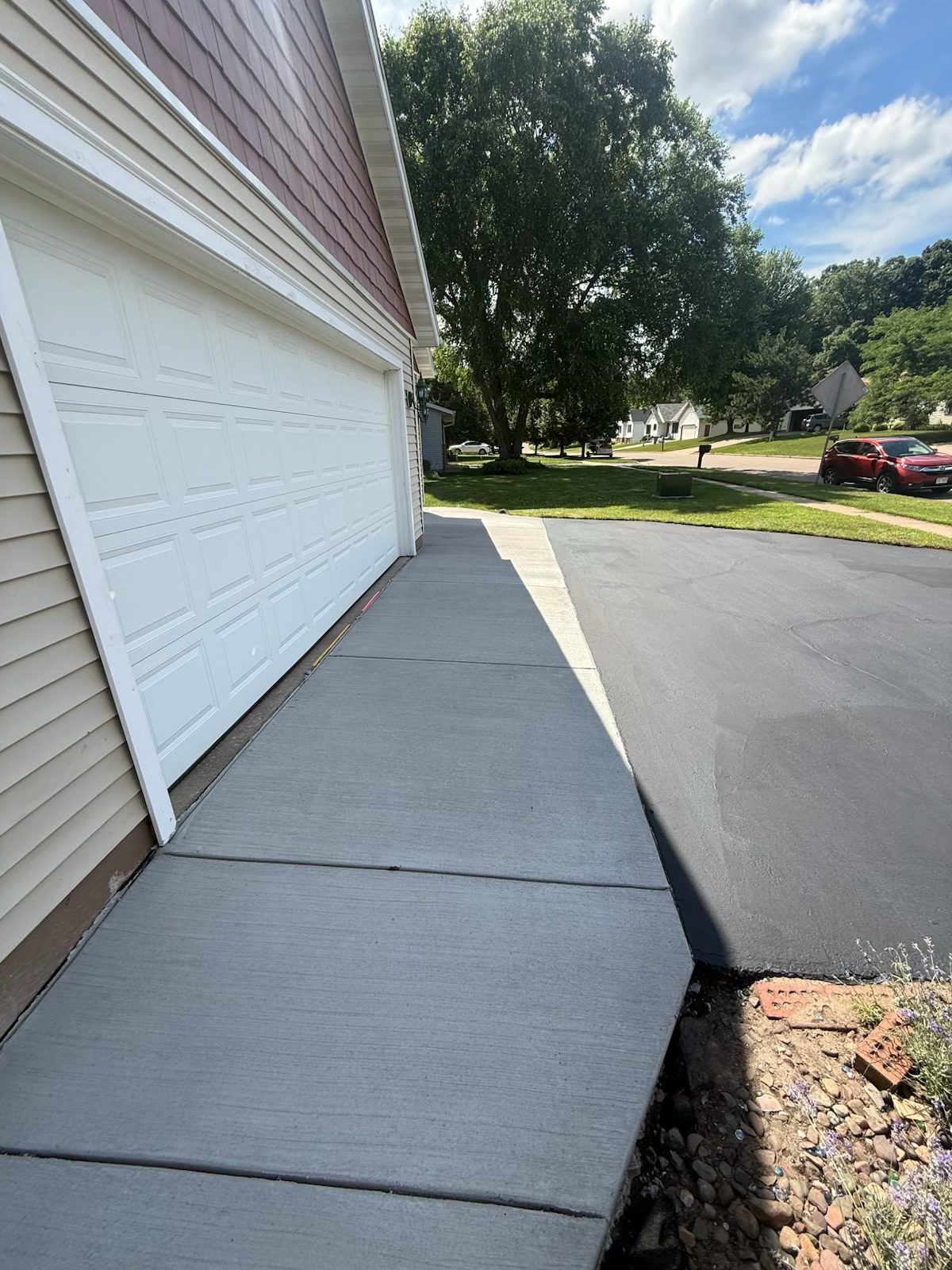
Jobs We Go Deeper On
Sidewalk replacement and trip hazards
What the federal standard calls a change in level, what a city sidewalk order actually says, and why a panel that lifted in one winter does not go back down.
Curb and gutter replacement
The plow takes the curb nose and the gutter scales first, because the gutter is where the salted slush ends up. Straight run and radius, replaced in sections.
Driveway approaches and entrance aprons
The approach is a joint between the street and your drive, built on two different bases. What the city calls it, and when it has to be concrete.
Commercial and residential concrete repair
Commercial work is quoted per project after a walk. Residential work prices off measurements, the same way flatwork does.
Commercial
The concrete at the entrance, the curb line and the walks.
Quoted per project
Cut at the joints so the repair has a straight edge to work to, taken out full depth, and poured back against the concrete that stays.
- Sidewalk panels and entrance walks, including the public walk across a frontage
- Curb and gutter, straight run and radius, formed to the island
- Approach aprons where the lot meets the street
- Drive lane and trash approach sections, and the collar around a storm grate
Residential
Driveways, aprons and walks.
Measured and quoted on site
The same work at a house: the apron at the garage door, the drive out to the street, and the walk to the door. Broom finish, control joints cut.
- Driveway sections that have cracked and dropped
- Garage aprons broken up at the overhead door
- Walks that have lifted at a tree root
- Old concrete broken out and hauled away
What decides the price.
Concrete repair is measured in a different unit for every part of a property, so the bands below are the units this work is priced in rather than sizes of job. What sets the number in each one is how much has to come out and what is found under it.
Sidewalk panels and entrance walks
Per panel
Measured on site
- Whole panels cut at the existing joints, not a piece out of the middle
- Poured back flush with the panels on either side of it
Curb and gutter
Per linear foot
Measured on site
- Broken curb face and gutter replaced in sections
- Radius work formed to the island instead of run straight
Driveway approaches and entrance aprons
Per approach
Measured on site
- The apron from the lot or the drive out to the gutter line
- Concrete where the street already has curb and gutter
Pads and slabs
Per section
Measured on site
- One failed section out at its joints, the sound concrete around it left alone
- The base under it repaired before anything goes back
Catch basin collars
Per structure
Measured on site
- The concrete ring around a storm grate, poured back to grade
- Sized to spread the load off the structure and onto the subgrade
What moves it: how many panels or feet come out, how deep the base repair goes under them, whether the section carries vehicles or only feet, what a concrete truck can reach, and how much asphalt has to be tied back in at the edge. Breaking the old concrete out and hauling it away is its own line on the estimate.
How the Work Goes
Saw cut, removal, base repair, forms and steel, the pour, and the joint at the edge.
Walk it and mark what comes out
Concrete moves at its joints, so the repair is decided in whole panels and whole sections. We mark what has failed and what the failed piece is sitting on, and you see the line before anything gets cut.
Saw cut at the joints
A clean vertical cut on an existing joint, full depth. Breaking concrete out on a ragged line leaves the next slab with no edge to bear against, which is where the repair opens up first.
Break it out and haul it away
The old concrete comes out full depth and goes on the truck. What is under it is usually the reason it failed, and it is not visible until then.
Repair and compact the base
Wet or washed-out material taken out, replaced and compacted. Concrete poured on soft ground cracks on a schedule set by the ground rather than by the concrete, and a panel replaced without touching the base lifts again.
Form against what stays
Formed to grade so water runs where it ran before, and poured tight against the concrete on either side. Radius forms on curb work, rebar tied in where it carries vehicles.
Pour, finish and seal the joint
Placed, screeded, floated and broom finished to match what it sits against. Where the repair meets asphalt, the asphalt gets cut tight to the new edge, compacted, and the joint sealed.
Where We Do This
Concrete repair and replacement across northwestern Wisconsin. A property with walks, curb and an approach can have all three looked at on the same visit.
What counts as a trip hazard on a sidewalk?
Who is responsible for the sidewalk in front of a building?
Can a lifted sidewalk panel be leveled instead of replaced?
The plow broke the curb nose. Does the whole curb line have to come out?
Do we need a permit for the approach at the street?
How long before new concrete takes traffic?
Tell us what has failed.
Which panels, how many feet of curb, or which approach, and a photo if you have one. If a letter from the city started this, say what date is on it.
(715) 450-9897Call and describe it. On a driveway we can usually tell you what you're looking at while you're on the phone.
Get an estimate
Send the form and we'll call you back. The estimate is free.