
Concrete in Colfax
Concrete in Colfax, Wisconsin.
Concrete flatwork, aprons and curb in Colfax. Commercial pours go down at 4,500 PSI with tied rebar, priced and scheduled with the asphalt.
About 25 minutes northwest of Eau Claire. The estimate is free.
Working in Colfax
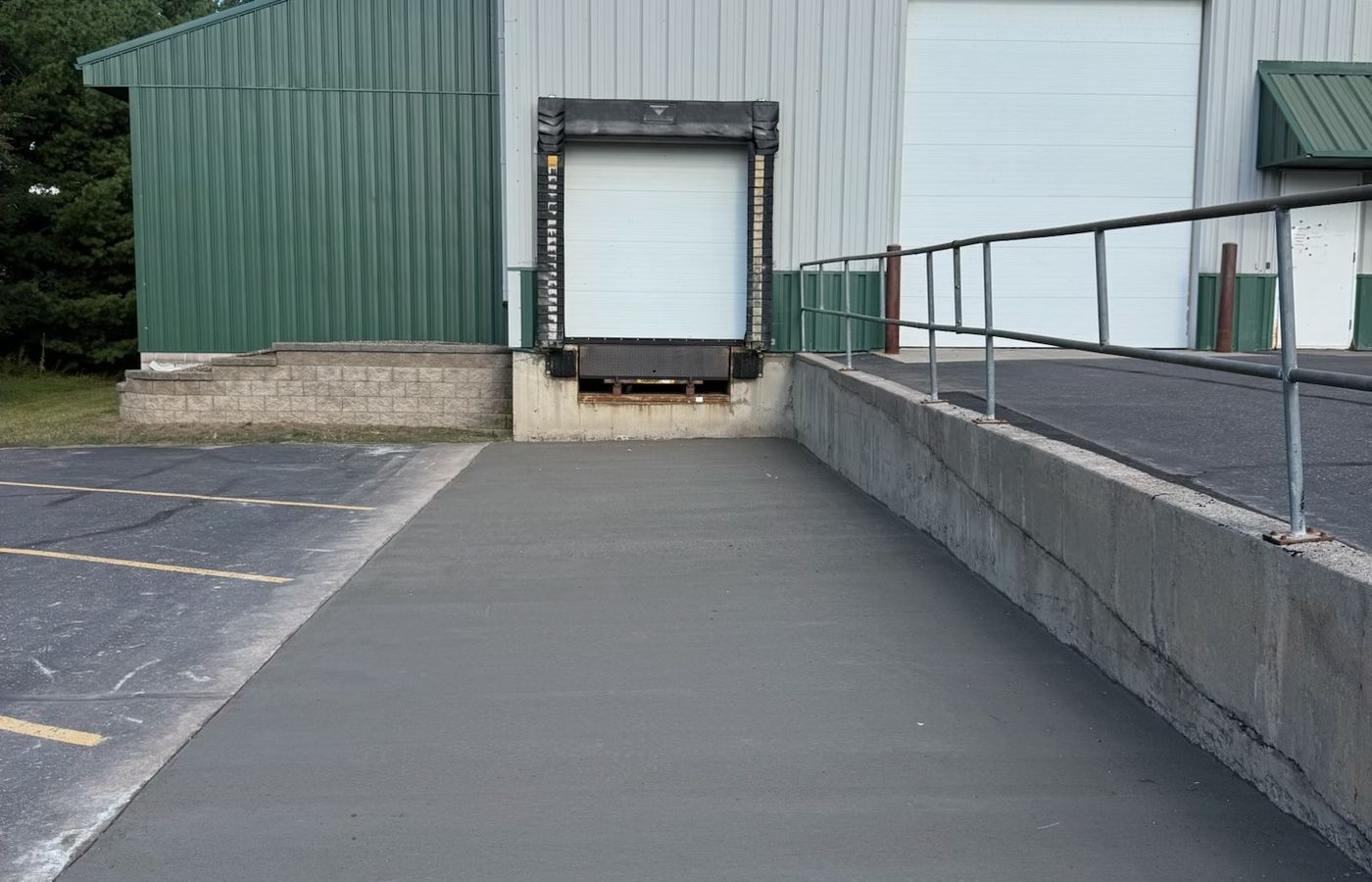
Aprons and pads at the manufacturers on Bremer Avenue and Willow Street, where the loading is real. Residential concrete here is mostly garage aprons that have settled at the joint with an older asphalt drive.
From our jobs
Job Photos
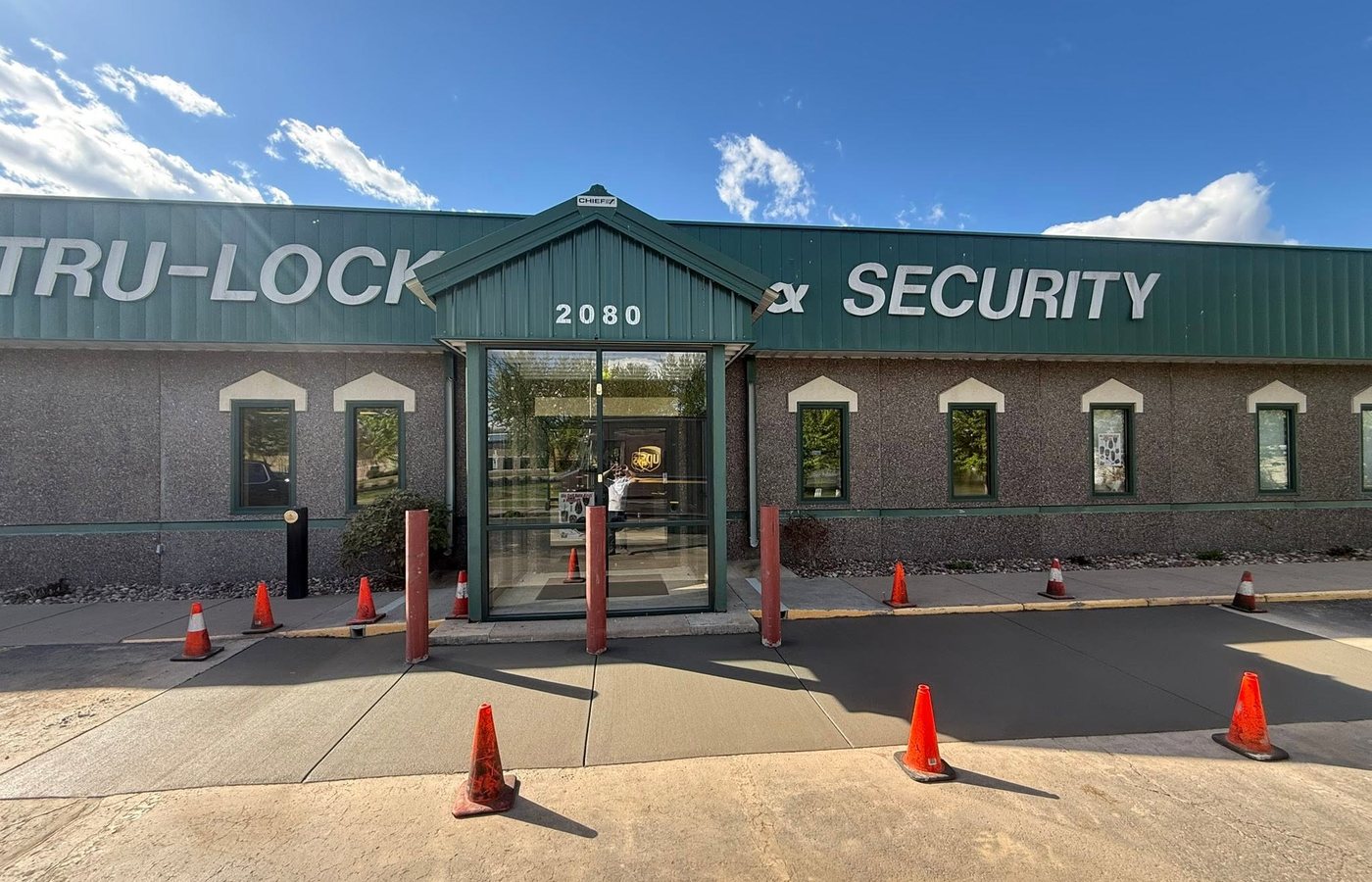
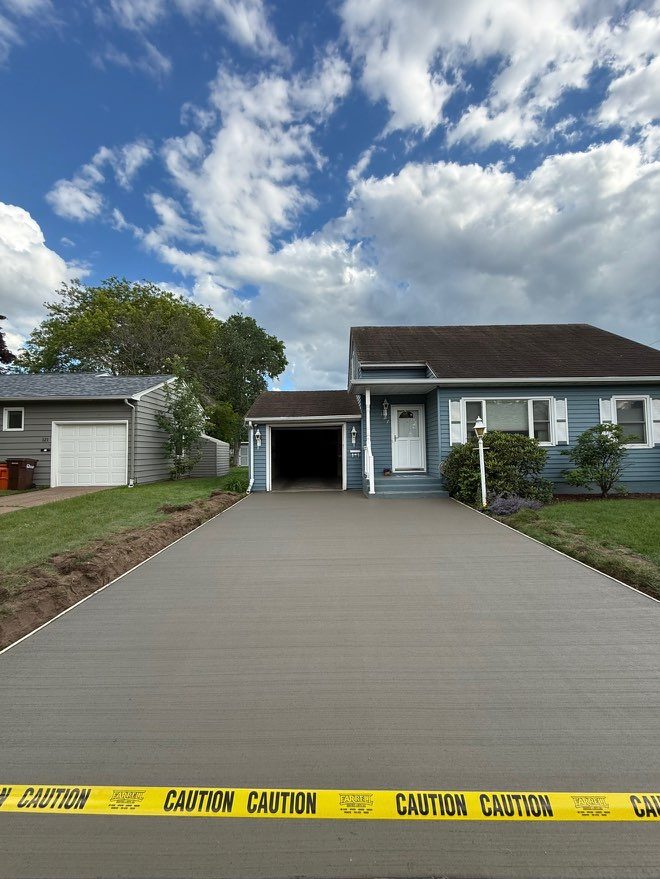
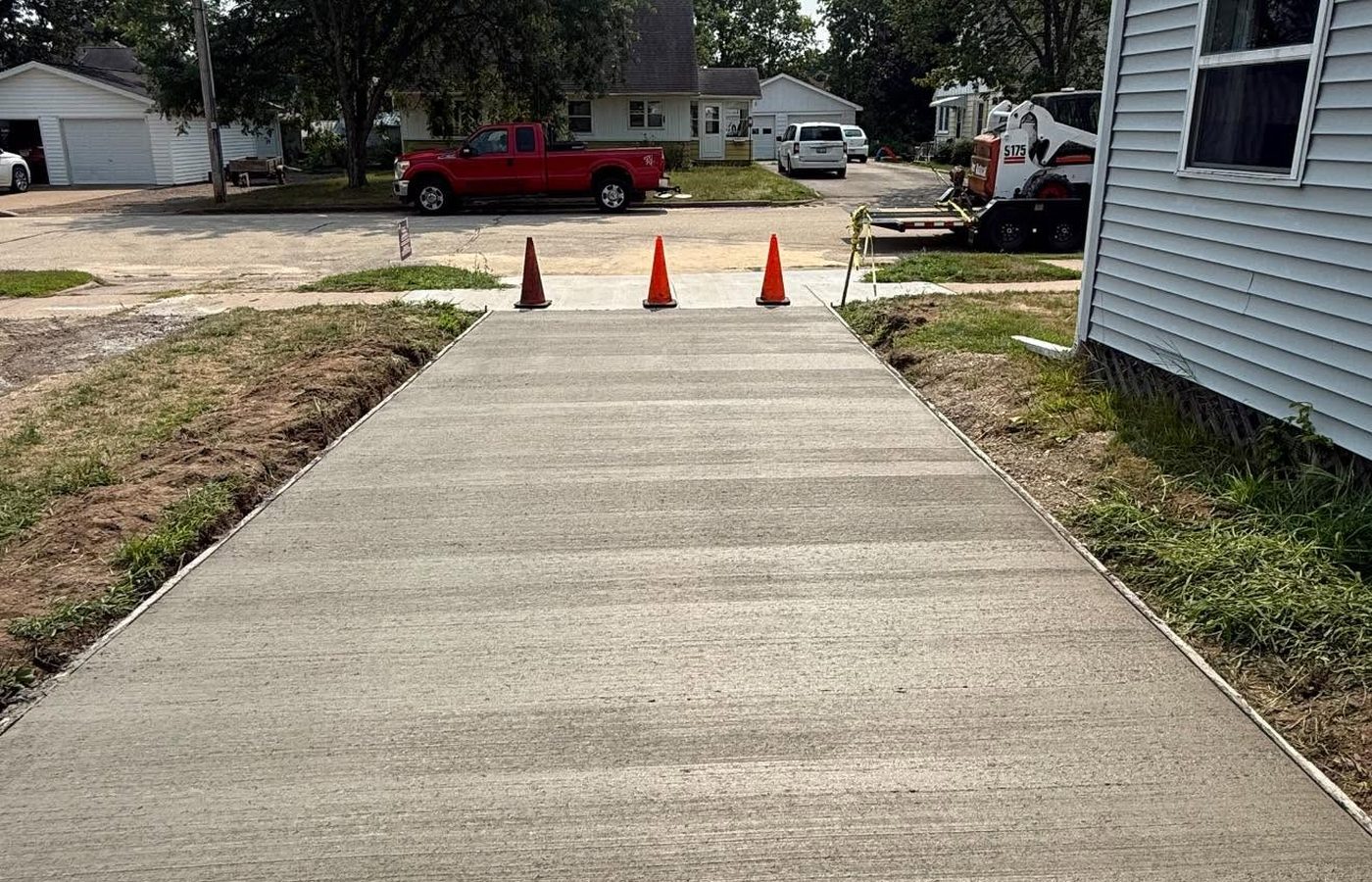
The joint between concrete and asphalt
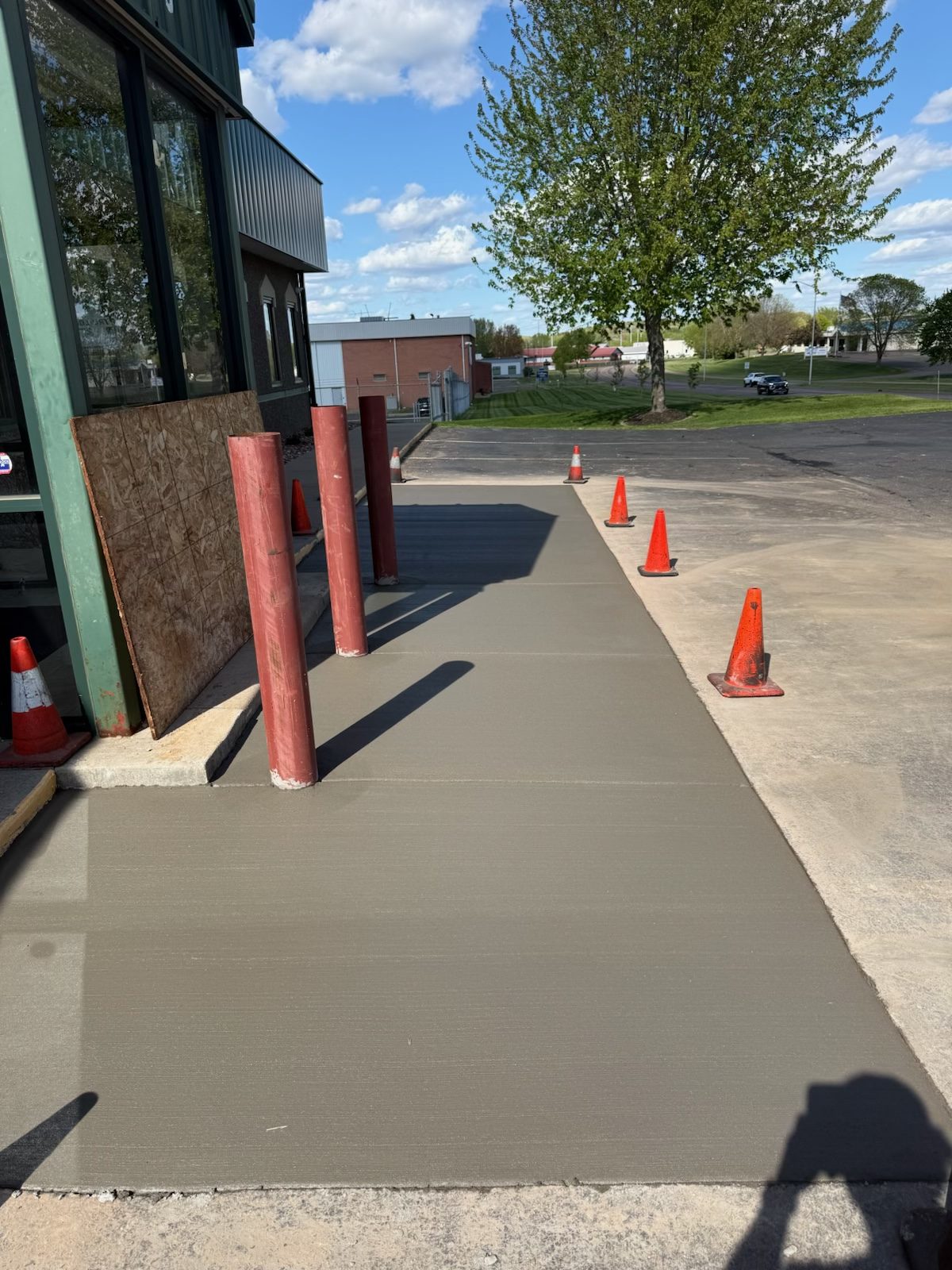
Concrete and asphalt move differently. Concrete is rigid and moves at its joints; asphalt is flexible and moves everywhere. Where they meet, that difference has to be absorbed, and if it's not, the joint opens. Once it's open, water goes straight into the base under both of them. This is why so many lots fail first at the dock apron, the dumpster pad and the garage apron. Not because those slabs were bad, but because two trades laid two materials and the line where they met was nobody's. We pour the concrete and lay the asphalt against it, so that joint belongs to the job.
What Decides the Price in Colfax
Flatwork prices per square foot and is easy to quote from measurements. Structural work like curb or a dock apron is quoted per project, because the forming is most of the labor and it doesn't scale with area.
Residential flatwork
Driveways, sidewalks, patios
Measured on site
- Per square foot, broom finish, base prepared
- Removal of the old surface priced separately
Garage or dock apron
Per project
Measured on site
- Thicker slab, tied rebar, asphalt tied back in
Dumpster pad
Per pad
Measured on site
- Heavy slab, because a loaded truck on a hot day is the worst case
- Sized to the truck, not to the dumpster
Curb and gutter
Per linear foot
Measured on site
- Straight run at the low end, radius work at the high end
What moves it: thickness, reinforcement, how much has to come out first, access for a truck, and whether the asphalt around it needs tying back in. Removal and haulaway is a real line and gets quoted rather than buried.
How We Do Concrete in Colfax
Base, forms, steel, pour, finish, and the asphalt tied back in against it.
Take out what's there
Broken slab out and hauled away, down to whatever the new pour needs to sit on.
Prepare and compact the base
Graded and compacted. Concrete poured on soft ground cracks on a schedule set by the ground, not by the concrete.
Form and reinforce
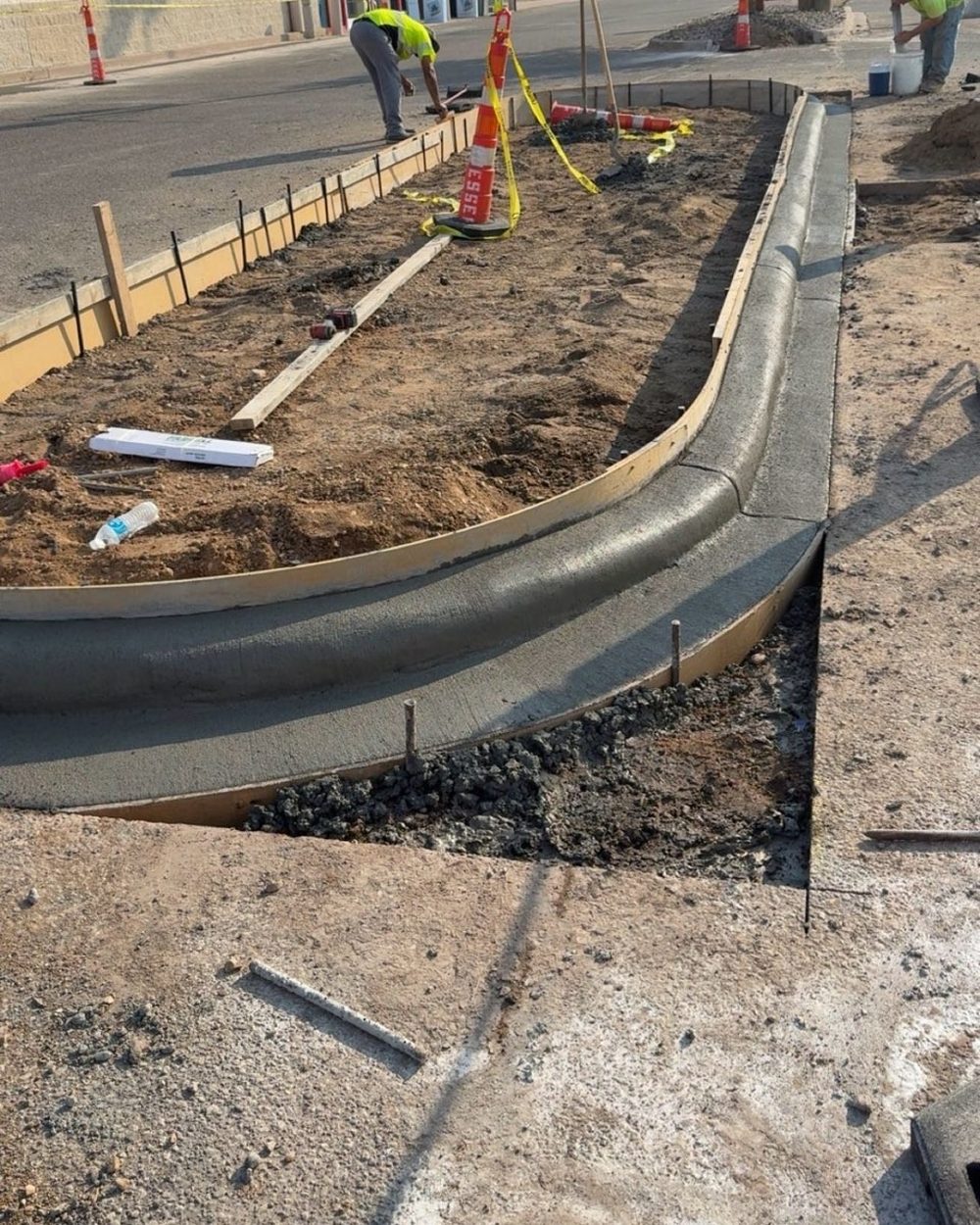
Formed to grade so water runs where it should, and reinforced where the span and the loading call for it. Radius forms for curb work.
Pour and finish
Placed, screeded, floated and broom finished. Control joints cut where the slab is going to crack, so that it cracks there instead of somewhere visible.
Tie the asphalt back in
The step most concrete contractors leave to somebody else. Asphalt cut tight to the new edge, compacted, joint sealed.
Is Colfax too far out for a driveway job?
How much does a concrete driveway cost?
Concrete or asphalt for a driveway?
Do you do curb and gutter?
Why do dumpster pads fail so often?
How long before we can use new concrete?
Do you subcontract the concrete out?
The Driveways and Lots in Colfax
Colfax sits on the Red Cedar River in Dunn County where Eighteen Mile Creek joins it, about eight miles north of the I-94 corridor. Highways 40 and 170 are the routes through the village. The river banks here are steep and wooded with sandstone outcrops, which isn't incidental: the village had a sandstone quarrying industry and its two landmark buildings are both built from the local stone.
For a village of this size the commercial surface is unusually spread out, which matters when you're pricing a job rather than looking at a map.
Main Street is the retail corridor and it runs in two clusters, the 100 block and then the 400 through 600 blocks, with small frontages and shared access. East Railroad Avenue is the second one, and it's the heavier of the two: the co-op with its fuel and agronomy traffic, the village public works yard, the museum. University Avenue is the whole school campus on a single site, elementary and high school together, which is one large parking area with a summer-only window.
Then there's manufacturing, on Bremer Avenue and Willow Street, which is genuine industrial loading in a village most people drive through without noticing it has any.
Colfax is really two housing stocks, and the reason is specific. On June 4, 1958 an F5 tornado crossed the south and east of the village and leveled dozens of homes. Those parts were rebuilt afterwards, and the Census figures still show it: almost 30 percent of the housing here dates from the 1950s, a far larger share than any other town in the area, with driveways laid to match.
The parts the tornado missed still carry the older stock, including the 1915 municipal building on Main Street and the 1914 depot that's now the railroad museum. What that means in practice is that two drives a few streets apart in Colfax can be forty years different in age, and they want different answers.
Colfax
We work all of Colfax rather than a named handful of neighborhoods.
Around Colfax: Colfax Municipal Building, Colfax Railroad Museum, Red Cedar River, Colfax Red Cedar Preserve, Felland Park.
1,252 people, 2024 Census estimate.
Standard 48-inch frost depth. The Red Cedar corridor through the village has steep banks and real grade change, so drainage varies sharply between the river side and the flat ground west of Main Street.
Get a Free Estimate in Colfax
Tell us what it looks like and we'll come measure it. You get a written price before anything starts.
(715) 450-9897- Free on driveways and lots anywhere in the service area
- A photo of the problem helps, and it can go in the message
- Surfaces that are not ready yet get told so at the estimate
Get an estimate
Send the form and we'll call you back. The estimate is free.
Other Work We Do in Colfax
- Sealcoating in Colfax
- Crack Filling and Sealing in Colfax
- Asphalt Repair and Patching in Colfax
- Catch Basin Repair in Colfax
- Parking Lot Striping in Colfax
- Track and Athletic Surfaces in Colfax
- Concrete Repair in Colfax
- Asphalt Paving in Colfax
- Commercial Snow Removal in Colfax
Concrete in Nearby Towns
- Concrete in Elk Mound
- Concrete in Menomonie
- Concrete in Bloomer
- Concrete in Lake Hallie
- Concrete in Chippewa Falls
- Concrete in Eau Claire
Everything about concrete, including how the work goes and what changes the price