
Concrete Repair in Stillwater
Concrete Repair in Stillwater, Minnesota.
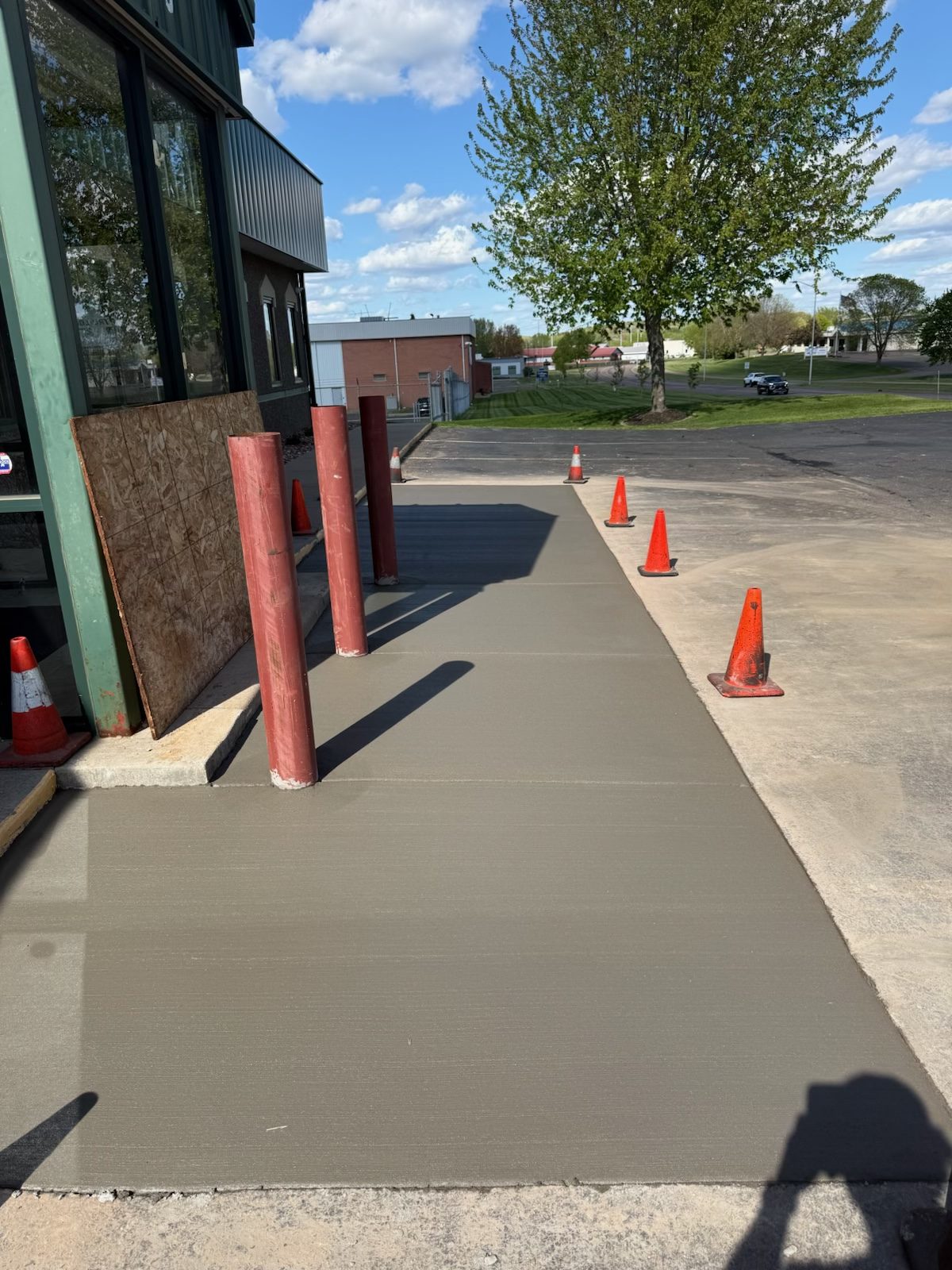
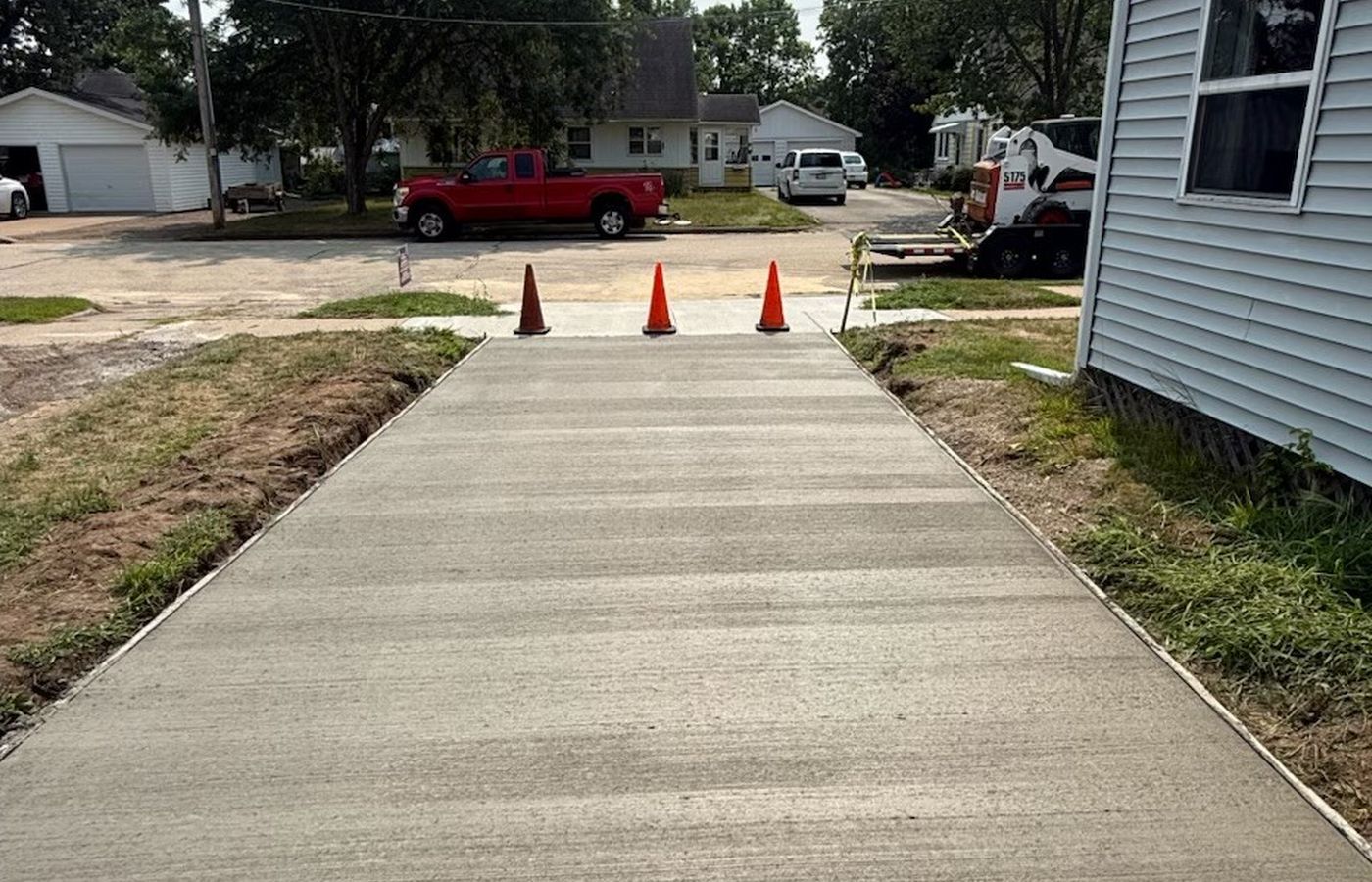
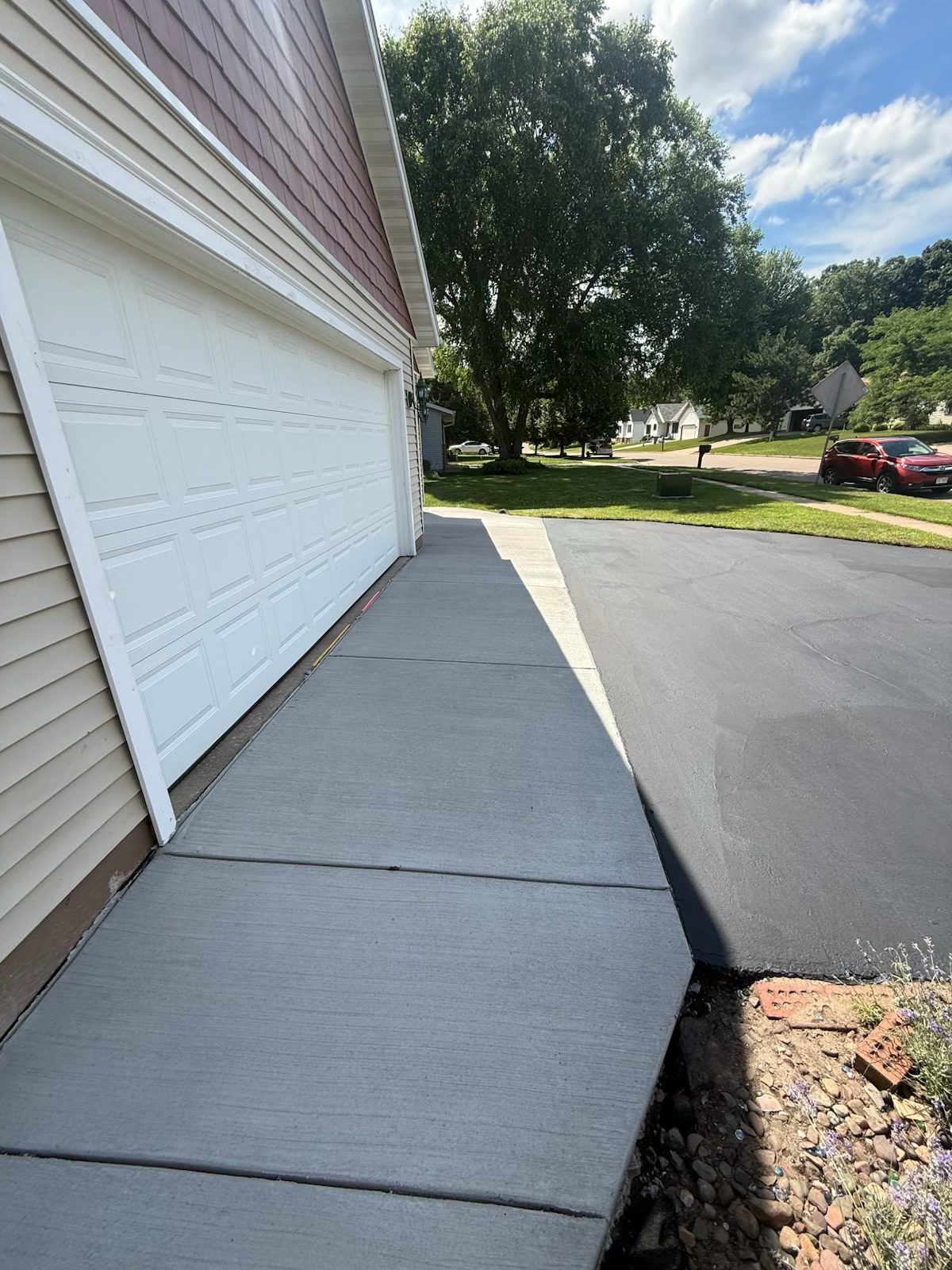
Concrete repair for commercial property in Stillwater. A lifted walk panel at the entrance, a curb face the plow took off, an approach broken up where the trucks come in. Cut out at the joints and poured back flush.
About an hour and a half west of Eau Claire on I-94 and north on Highway 36. The estimate is free.
Working in Stillwater
Stillwater runs a sidewalk rehabilitation project and splits it down the middle, half from city funds and half assessed to the adjacent property owners. A walk goes on that list when it is severely cracked, raised, settled or misaligned enough to be a tripping hazard. The city has had properties appraised to compare the estimated assessments against the benefit the work is judged to add. Downtown is where the walk frontage is, with a public ramp a block west of Main Street and roughly 760 surface spaces mostly along the river, and the rest of the commercial concrete is out on the Highway 36 side at Market Drive and around Lakeview Hospital on Churchill Street West.
From our jobs
Job Photos
How concrete fails in a Wisconsin winter
Four things take concrete apart here, and each one goes after a different part of a property. A sidewalk panel sits on saturated ground or over a root. The water under it freezes, expands and lifts the panel. In spring the ground thaws and settles, and the panel does not go all the way back down with it, so what was flush in October is a lip in April. Then a plow blade catches that lip every storm for five months and breaks the leading edge off it. A curb takes the plow head on. The blade rides up the gutter, catches the curb face and takes the nose off in chunks. Salted slush sits in the gutter longer than anywhere else on the lot, because the gutter is where everything on the lot drains to, so the gutter is where the surface scales first. De-icer does the same thing to flat concrete. Chloride pulls water into the surface and runs more freeze and thaw cycles through it in a season than the weather would on its own. The mortar skin comes off in flakes and the aggregate stands proud. The approach at the street is a joint between two slabs that belong to different people. The street sits on a road section and a deep base; the drive sits on whatever was there. Frost gets under the shallower one first, the apron cracks along the gutter line, and that crack takes water into the base under both of them.
What Decides the Price in Stillwater
Concrete repair is measured in a different unit for every part of a property, so the bands below are the units this work is priced in rather than sizes of job. What sets the number in each one is how much has to come out and what is found under it.
Sidewalk panels and entrance walks
Per panel
Measured on site
- Whole panels cut at the existing joints, not a piece out of the middle
- Poured back flush with the panels on either side of it
Curb and gutter
Per linear foot
Measured on site
- Broken curb face and gutter replaced in sections
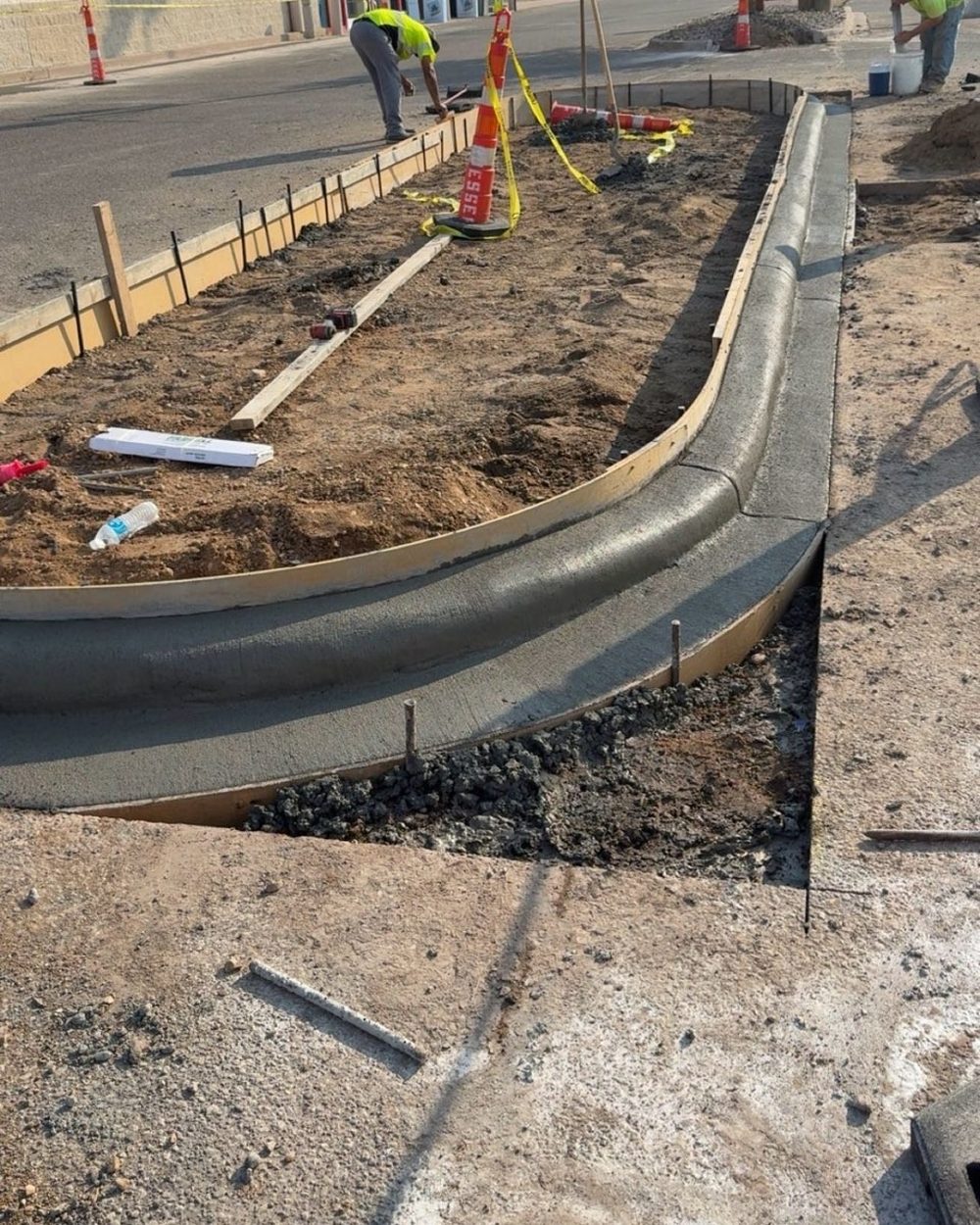
- Radius work formed to the island instead of run straight
Driveway approaches and entrance aprons
Per approach
Measured on site
- The apron from the lot or the drive out to the gutter line
- Concrete where the street already has curb and gutter
Pads and slabs
Per section
Measured on site
- One failed section out at its joints, the sound concrete around it left alone
- The base under it repaired before anything goes back
Catch basin collars
Per structure
Measured on site
- The concrete ring around a storm grate, poured back to grade
- Sized to spread the load off the structure and onto the subgrade
What moves it: how many panels or feet come out, how deep the base repair goes under them, whether the section carries vehicles or only feet, what a concrete truck can reach, and how much asphalt has to be tied back in at the edge. Breaking the old concrete out and hauling it away is its own line on the estimate.
How We Do Concrete Repair in Stillwater
Saw cut, removal, base repair, forms and steel, the pour, and the joint at the edge.
Walk it and mark what comes out
Concrete moves at its joints, so the repair is decided in whole panels and whole sections. We mark what has failed and what the failed piece is sitting on, and you see the line before anything gets cut.
Saw cut at the joints
A clean vertical cut on an existing joint, full depth. Breaking concrete out on a ragged line leaves the next slab with no edge to bear against, which is where the repair opens up first.
Break it out and haul it away
The old concrete comes out full depth and goes on the truck. What is under it is usually the reason it failed, and it is not visible until then.
Repair and compact the base
Wet or washed-out material taken out, replaced and compacted. Concrete poured on soft ground cracks on a schedule set by the ground rather than by the concrete, and a panel replaced without touching the base lifts again.
Form against what stays
Formed to grade so water runs where it ran before, and poured tight against the concrete on either side. Radius forms on curb work, rebar tied in where it carries vehicles.
Pour, finish and seal the joint
Placed, screeded, floated and broom finished to match what it sits against. Where the repair meets asphalt, the asphalt gets cut tight to the new edge, compacted, and the joint sealed.
Questions We Get in Stillwater
What Stillwater calls us about, answered straight.
More questions answeredHow far is it from Eau Claire, and do you come this far for a lot?
Does county work have to go out as a formal bid?
What counts as a trip hazard on a sidewalk?
Who is responsible for the sidewalk in front of a building?
Can a lifted sidewalk panel be leveled instead of replaced?
The plow broke the curb nose. Does the whole curb line have to come out?
Do we need a permit for the approach at the street?
How long before new concrete takes traffic?
The Lots and Surfaces in Stillwater
Stillwater is the Washington County seat, on the St. Croix River, about 19,000 people and roughly 74 miles from Eau Claire: I-94 west and then north on Highway 36. Highways 36, 95 and 96 all run through it. The old downtown is down on the river and the newer commercial ground is out west along 36.
The county holds the biggest institutional ground in town. The Washington County Government Center on 62nd Street North is the main campus for county government, and the courthouse carries community corrections and the Tenth Judicial District courts. Lakeview Hospital is on Churchill Street West and City Hall is on 4th Street North.
The retail is on Highway 36. Stillwater Marketplace on Market Drive runs 13.6 acres and about 100,922 square feet of retail anchored by Cub Foods and Target, built in phases between 1996 and 2000, and Valley Ridge Center on 36 is another 82,289 square feet on 8.32 acres. West Stillwater has a business park area along Curve Crest Boulevard and Tower Drive, zoned business park office with Highway 36 access. Downtown is a parking question more than a retail corridor: the city runs a paid ramp of 248 spaces a block west of Main Street plus roughly 760 surface spaces, most of them along the river.
Where we work in Stillwater
- Curve Crest Boulevard
- Tower Drive
- Market Drive
- The Highway 36 corridor
- Downtown Main Street
Around Stillwater: The Stillwater Lift Bridge, Lowell Park on the riverfront, The Washington County Government Center on 62nd Street North, Lakeview Hospital on Churchill Street West, The Warden's House Museum.
19,386 people, 2024 Census estimate.
The ground around here is sandy glacial outwash, excessively drained, sand and sandy loam textures. MnDOT has wanted 30 to 36 inches of frost-free material under asphalt since 1995, and it rates silt as the worst soil there is for frost heave.
Get a Free Estimate in Stillwater
Tell us what it looks like and we'll come measure it. You get a written price before anything starts.
(715) 450-9897- Free on commercial lots and properties in Stillwater
- A photo of the problem helps, and it can go in the message
- Surfaces that are not ready yet get told so at the estimate
Get an estimate
Send the form and we'll call you back. The estimate is free.
Other Work We Do in Stillwater
- Sealcoating in Stillwater
- Crack Filling and Sealing in Stillwater
- Asphalt Repair and Patching in Stillwater
- Catch Basin Repair in Stillwater
- Parking Lot Striping in Stillwater
- Track and Athletic Surfaces in Stillwater
- Concrete in Stillwater
- Asphalt Paving in Stillwater
Concrete Repair in Nearby Towns
- Concrete Repair in Lake Elmo
- Concrete Repair in Hudson
- Concrete Repair in Oakdale
- Concrete Repair in Maplewood
- Concrete Repair in Woodbury
- Concrete Repair in New Richmond
Everything about concrete repair, including how the work goes and what changes the price