
Concrete Repair in Altoona
Concrete Repair in Altoona, Wisconsin.
Concrete repair and replacement in Altoona. Lifted sidewalk panels, broken curb, a cracked approach at the street, cut out at the joints and poured back flush.
About 8 minutes from central Eau Claire. The estimate is free.
Working in Altoona
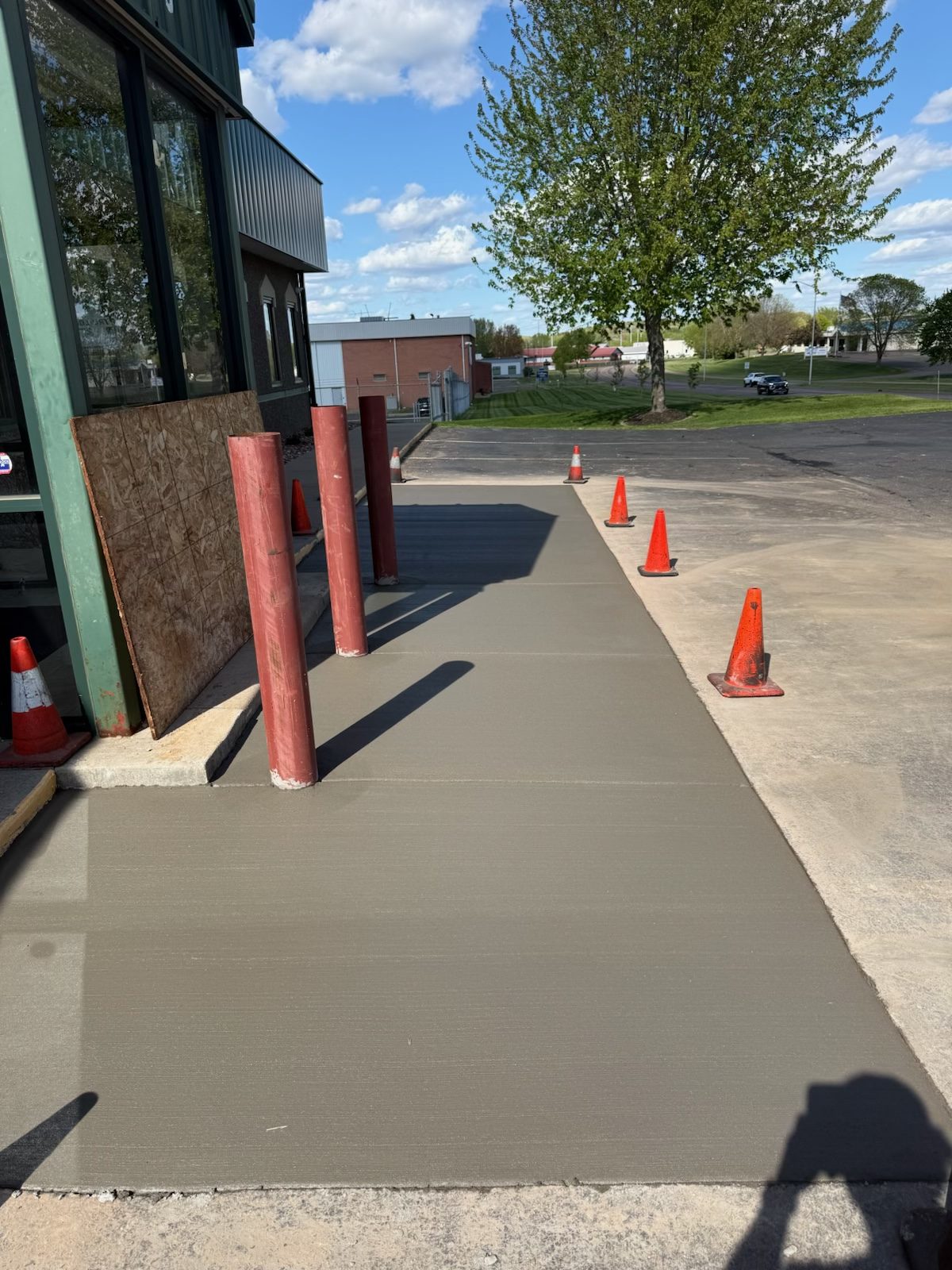
Altoona puts the walk squarely on the abutting owner, whose duty under the code is to build, repair and perpetually maintain it and to pay the entire cost. Nobody may lay, remove, replace or repair a public sidewalk in Altoona without a permit from the City Building Inspector, with notice given so the City can inspect before, during and after. An owner also loses the choice of arranging the work himself on a block the City plans to contract in the same calendar year, which is worth settling before a number goes into a budget. Driveway approaches run through the Director of Public Works on their own permit, and every approach built or altered has to be portland cement concrete.
From our jobs
Job Photos
How concrete fails in a Wisconsin winter
Four things take concrete apart here, and each one goes after a different part of a property. A sidewalk panel sits on saturated ground or over a root. The water under it freezes, expands and lifts the panel. In spring the ground thaws and settles, and the panel does not go all the way back down with it, so what was flush in October is a lip in April. Then a plow blade catches that lip every storm for five months and breaks the leading edge off it. A curb takes the plow head on. The blade rides up the gutter, catches the curb face and takes the nose off in chunks. Salted slush sits in the gutter longer than anywhere else on the lot, because the gutter is where everything on the lot drains to, so the gutter is where the surface scales first. De-icer does the same thing to flat concrete. Chloride pulls water into the surface and runs more freeze and thaw cycles through it in a season than the weather would on its own. The mortar skin comes off in flakes and the aggregate stands proud. The approach at the street is a joint between two slabs that belong to different people. The street sits on a road section and a deep base; the drive sits on whatever was there. Frost gets under the shallower one first, the apron cracks along the gutter line, and that crack takes water into the base under both of them.
What Decides the Price in Altoona
Concrete repair is measured in a different unit for every part of a property, so the bands below are the units this work is priced in rather than sizes of job. What sets the number in each one is how much has to come out and what is found under it.
Sidewalk panels and entrance walks
Per panel
Measured on site
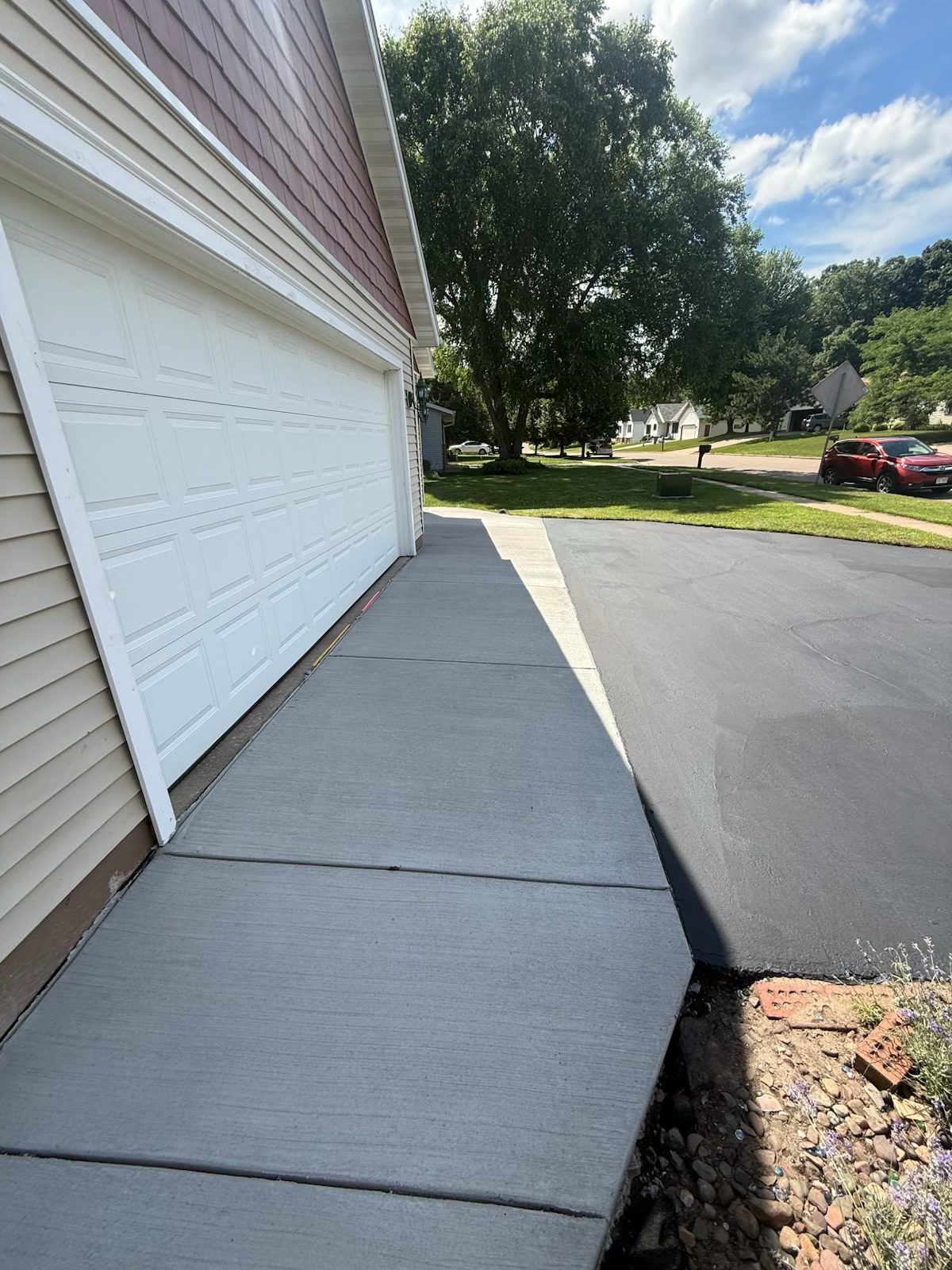
- Whole panels cut at the existing joints, not a piece out of the middle
- Poured back flush with the panels on either side of it
Curb and gutter
Per linear foot
Measured on site
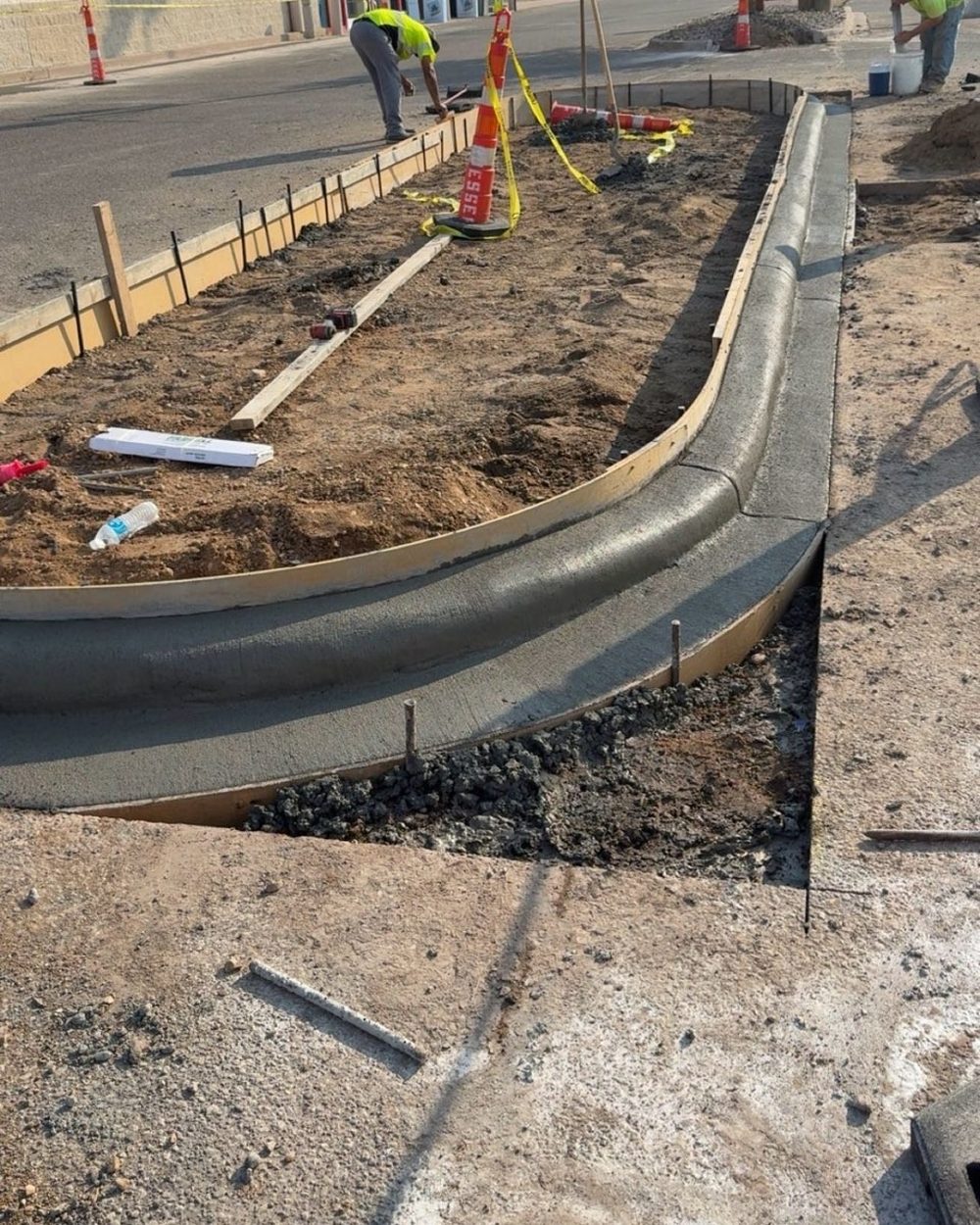
- Broken curb face and gutter replaced in sections
- Radius work formed to the island instead of run straight
Driveway approaches and entrance aprons
Per approach
Measured on site
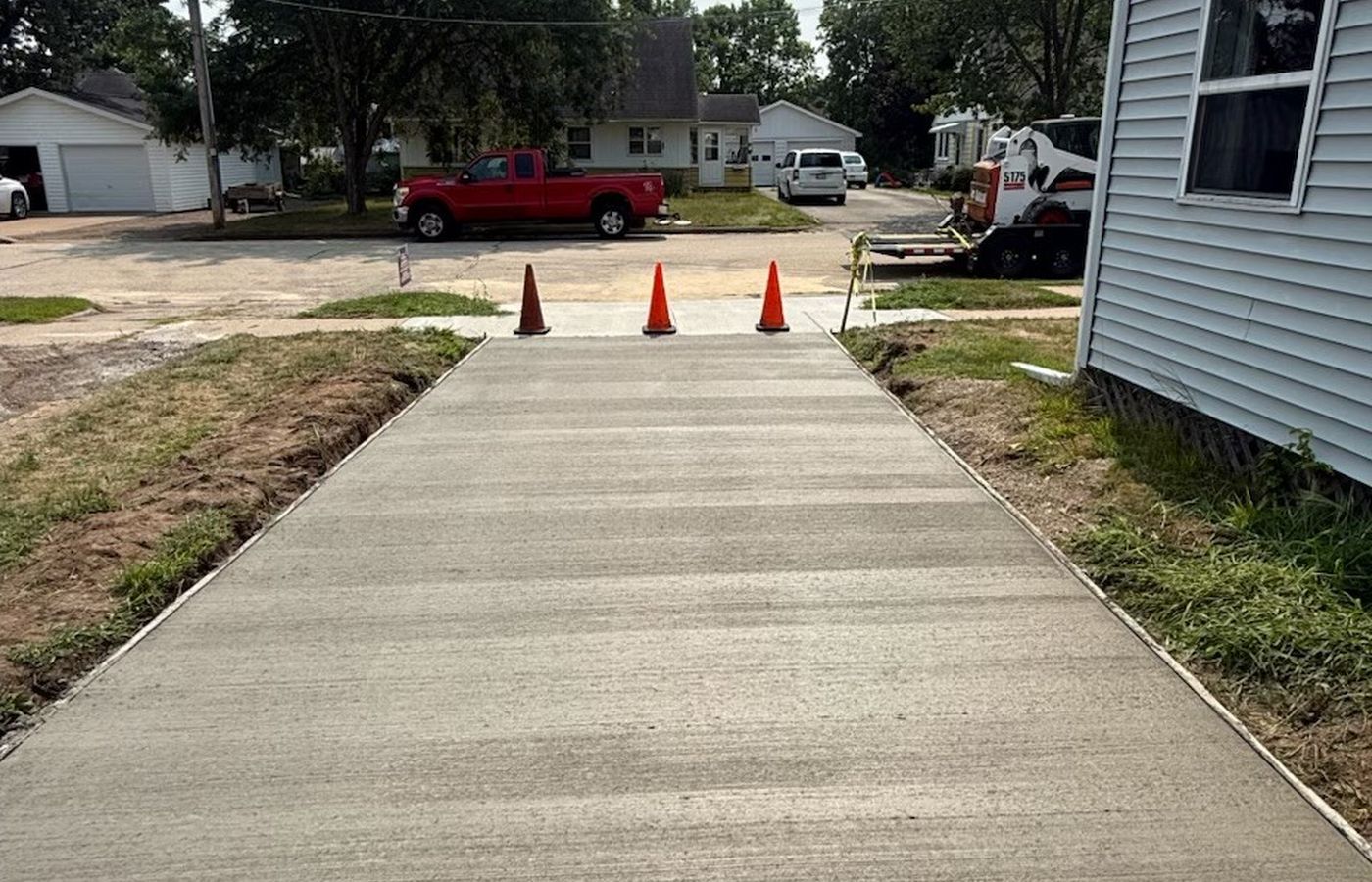
- The apron from the lot or the drive out to the gutter line
- Concrete where the street already has curb and gutter
Pads and slabs
Per section
Measured on site
- One failed section out at its joints, the sound concrete around it left alone
- The base under it repaired before anything goes back
Catch basin collars
Per structure
Measured on site
- The concrete ring around a storm grate, poured back to grade
- Sized to spread the load off the structure and onto the subgrade
What moves it: how many panels or feet come out, how deep the base repair goes under them, whether the section carries vehicles or only feet, what a concrete truck can reach, and how much asphalt has to be tied back in at the edge. Breaking the old concrete out and hauling it away is its own line on the estimate.
How We Do Concrete Repair in Altoona
Saw cut, removal, base repair, forms and steel, the pour, and the joint at the edge.
Walk it and mark what comes out
Concrete moves at its joints, so the repair is decided in whole panels and whole sections. We mark what has failed and what the failed piece is sitting on, and you see the line before anything gets cut.
Saw cut at the joints
A clean vertical cut on an existing joint, full depth. Breaking concrete out on a ragged line leaves the next slab with no edge to bear against, which is where the repair opens up first.
Break it out and haul it away
The old concrete comes out full depth and goes on the truck. What is under it is usually the reason it failed, and it is not visible until then.
Repair and compact the base
Wet or washed-out material taken out, replaced and compacted. Concrete poured on soft ground cracks on a schedule set by the ground rather than by the concrete, and a panel replaced without touching the base lifts again.
Form against what stays
Formed to grade so water runs where it ran before, and poured tight against the concrete on either side. Radius forms on curb work, rebar tied in where it carries vehicles.
Pour, finish and seal the joint
Placed, screeded, floated and broom finished to match what it sits against. Where the repair meets asphalt, the asphalt gets cut tight to the new edge, compacted, and the joint sealed.
What counts as a trip hazard on a sidewalk?
Who is responsible for the sidewalk in front of a building?
Can a lifted sidewalk panel be leveled instead of replaced?
The plow broke the curb nose. Does the whole curb line have to come out?
Do we need a permit for the approach at the street?
How long before new concrete takes traffic?
The Lots and Surfaces in Altoona
Altoona sits immediately east of Eau Claire, close enough that Fairfax Street is most of what separates them. Lake Altoona and the Eau Claire River form the northern edge and Otter Creek the southern one. The US 53 bypass opened in 2006 with an interchange at River Prairie Drive, and essentially everything new in town has been built around that interchange since.
The interesting thing about Altoona for pavement is the age gap. The 1970s subdivisions are at the point where their original surfaces are long gone and the question is whether the base is still worth building on. The River Prairie construction is the opposite problem: those drives and lots are new enough that leaving them alone for another year or two is usually the right call.
We get asked to seal brand new asphalt here more than anywhere else, and the answer is usually no, not yet. New asphalt wants six to twelve months to cure first.
Where we work in Altoona
- Downtown Altoona
- River Prairie
- East Hill
- Hillcrest
Around Altoona: Lake Altoona County Park, River Prairie Park, Cinder City Park, The Yard, Otter Creek.
9,302 people, 2024 Census estimate.
Identical freeze regime to Eau Claire next door, with the 48-inch footing minimum. Lake Altoona and Otter Creek mean the north and south edges of town both sit close to water, and the drives nearest them hold moisture longer in spring.
Get a Free Estimate in Altoona
Tell us what it looks like and we'll come measure it. You get a written price before anything starts.
(715) 450-9897- Free on driveways and lots anywhere in the service area
- A photo of the problem helps, and it can go in the message
- Surfaces that are not ready yet get told so at the estimate
Get an estimate
Send the form and we'll call you back. The estimate is free.
Other Work We Do in Altoona
- Sealcoating in Altoona
- Crack Filling and Sealing in Altoona
- Asphalt Repair and Patching in Altoona
- Catch Basin Repair in Altoona
- Parking Lot Striping in Altoona
- Track and Athletic Surfaces in Altoona
- Concrete in Altoona
- Asphalt Paving in Altoona
- Commercial Snow Removal in Altoona
Concrete Repair in Nearby Towns
- Concrete Repair in Eau Claire
- Concrete Repair in Lake Hallie
- Concrete Repair in Fall Creek
- Concrete Repair in Chippewa Falls
- Concrete Repair in Elk Mound
- Concrete Repair in Cadott
Everything about concrete repair, including how the work goes and what changes the price